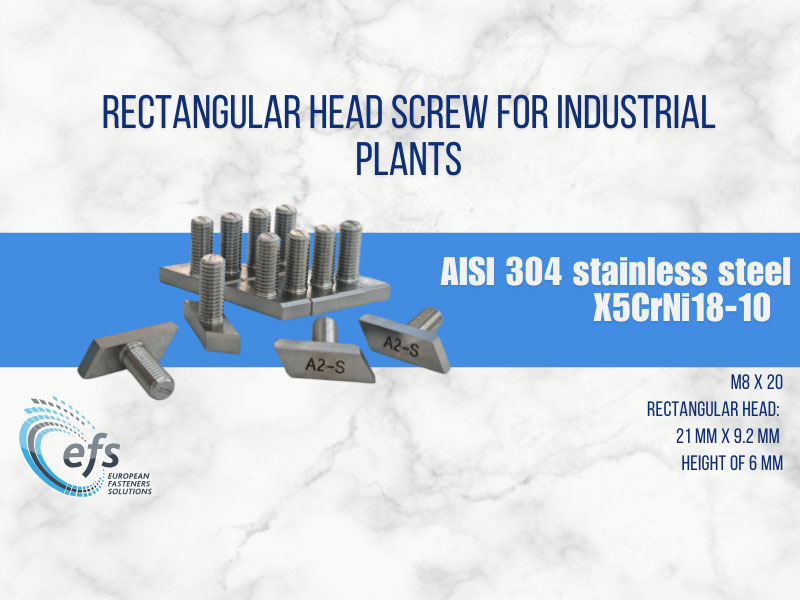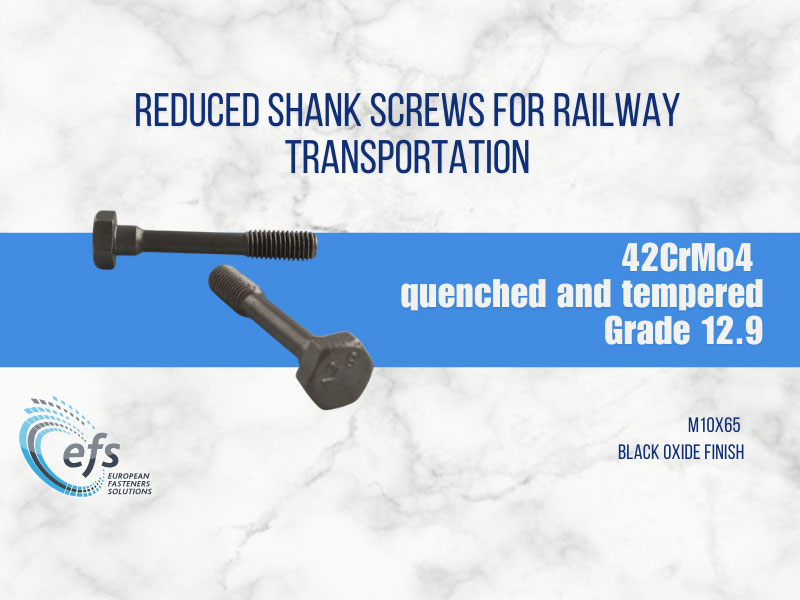


Hammer head screws are fastening components designed for insertion into slots, guides and industrial profiles. The specific geometry of the head allows mechanical locking inside the seat without the need to hold the screw during tightening, making them particularly suitable for applications with limited space and restricted accessibility.
This type of fastener is used in machine tools, industrial plants, modular structures, handling systems and mechanical equipment where secure, adjustable and easily inspectable connections are required.
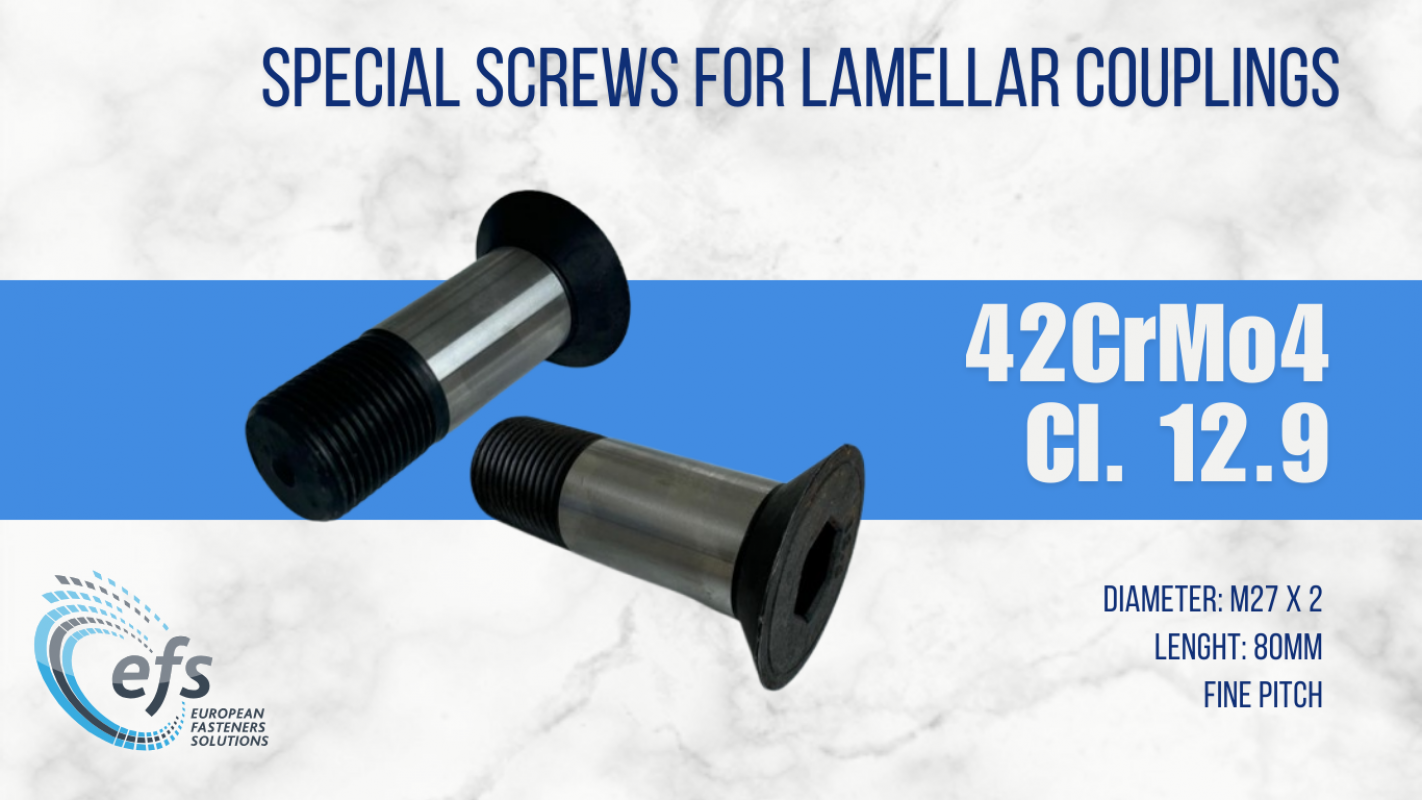
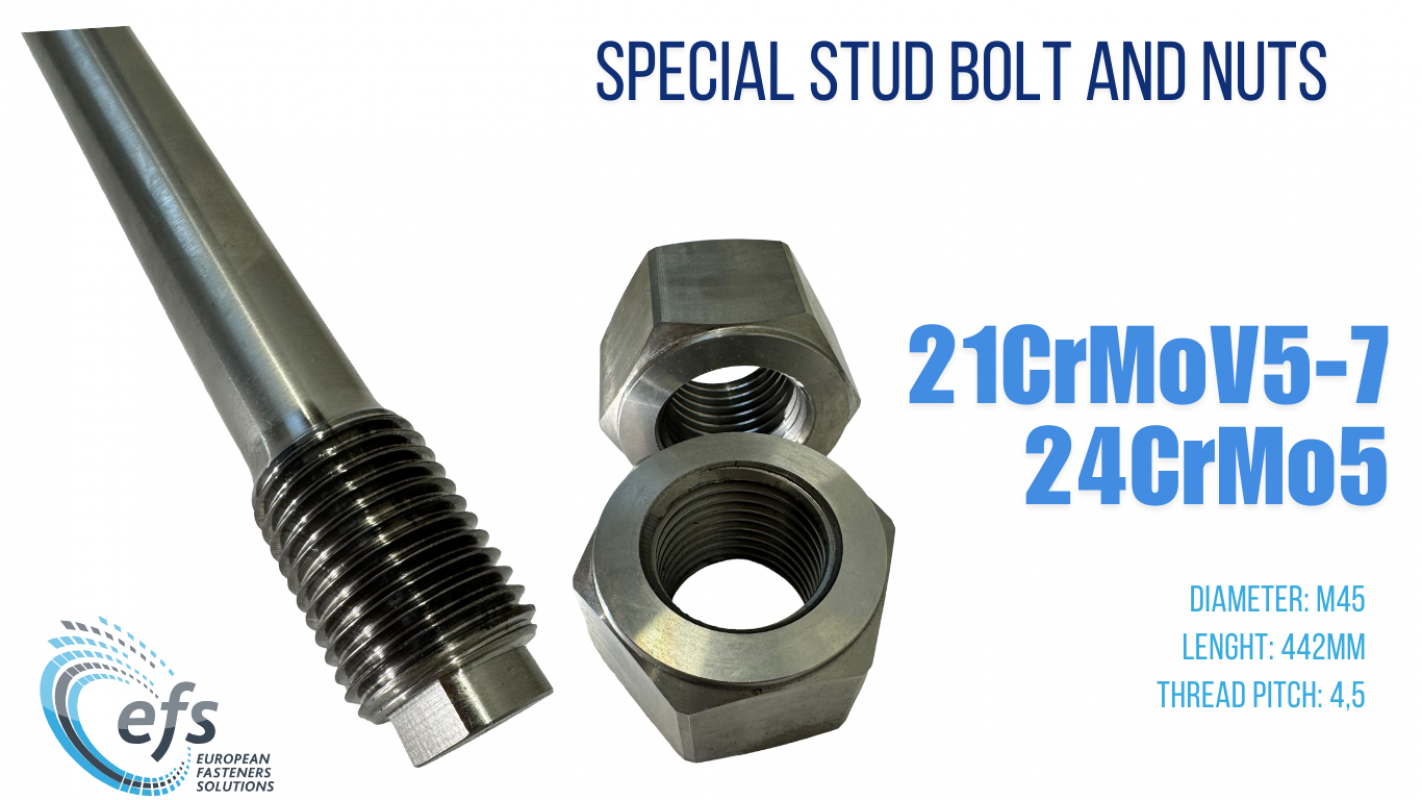
In addition to standard versions according to DIN 186, DIN 188 and DIN 261, the industrial market frequently uses made-to-drawing hammer head screws, developed to fit slots, profiles or components with specific geometries.
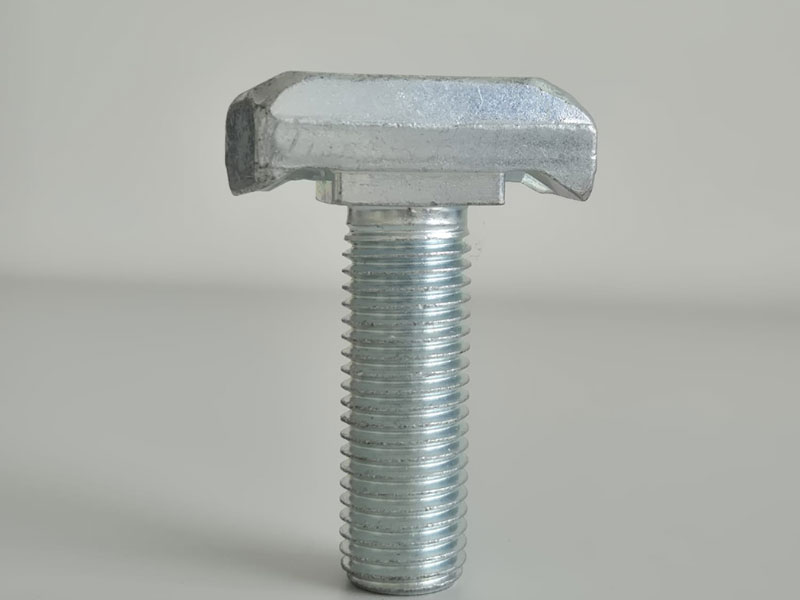
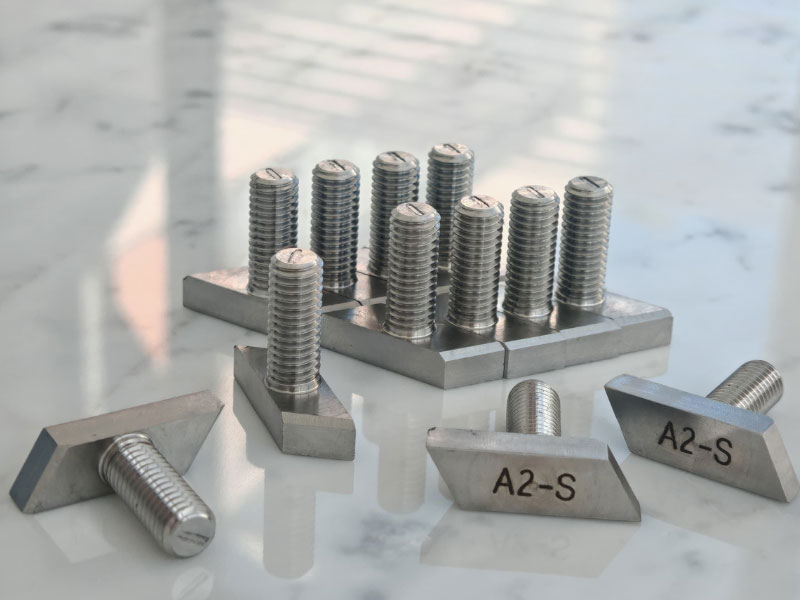
Characteristics of Hammer Head Screws
The main function of hammer head screws is to ensure stable fastening inside a slot or guide without requiring access to the rear side of the connection.
The head is inserted into the slot and rotated into the working position, creating a coupling that prevents rotation during tightening.
Compared to traditional fasteners, this configuration offers several advantages:
- quick assembly
- reduced space requirements
- possibility of adjustment along the guide
- no need for additional machining on the structure
- high reliability even in the presence of vibration
Hammer head screws can be manufactured with metric or imperial threads, special lengths and customized geometries according to the final application.
DIN 186, DIN 188 and DIN 261 Hammer Head Screws
The main reference standards for this product family are:
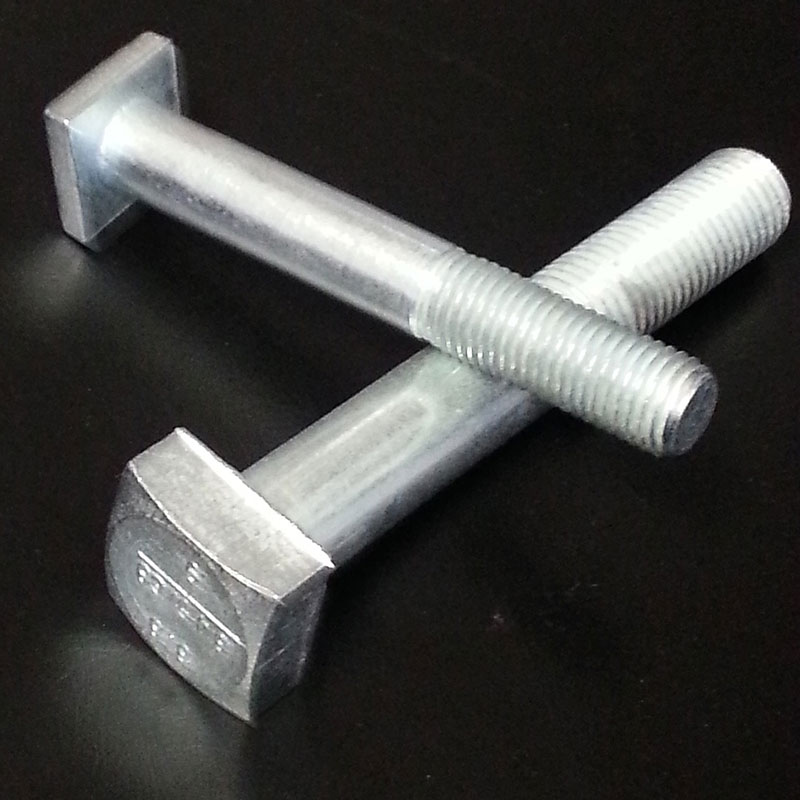
DIN 186 – Hammer Head Screws with Square Neck
DIN 186 identifies screws characterized by a square neck under the head, which provides an anti-rotation function during tightening.
This configuration is particularly valued in metal structures and industrial fastening systems where correct positioning of the screw inside the slot must be ensured.
DIN 188 – Hammer Head Screws with Double Projection
DIN 188 screws feature a specific geometry with double projection, which facilitates correct positioning in the seat and improves coupling stability.
They are used in many industrial applications where the fastener must maintain the correct orientation during assembly and maintenance operations.
DIN 261 – Hammer Head Screws
DIN 261 defines a hammer head screw configuration widely used in guides, profiles and industrial fastening systems.
Thanks to the shape of the head, these components make it possible to create compact and easily adjustable connections without requiring complex machining on the structure.
Bolts for T-Slots and T-Channels
In the same application field, bolts designed for T-slots and T-channels are also used, particularly in machine tools and clamping systems.
The main references are:
- DIN 787 – T-slot bolts
- ISO 299 – T-slot bolts for machine tools
These components are designed to work inside standardized slots found on machine tables, machining centres, clamping equipment and positioning systems.
The possibility of adjusting the fastening point along the slot makes this solution extremely versatile in machining operations and tooling activities.
Rectangular Head Screws and Special Solutions
Rectangular head screws are often associated with hammer head screws due to their similar geometry and operating principle, based on the anti-rotation function of the head inside the seat.
However, they are a distinct category that, in industrial applications, is frequently manufactured to drawing according to the dimensions of the slot, operating loads and construction constraints of the machinery.
These solutions are used in:
- industrial plants
- handling systems
- special machinery
- mechanical steel construction
- OEM modular structures
Made-to-drawing production allows complete customization of head width, thickness, shank length, thread and material.
Industrial Applications of Hammer Head Screws
Hammer head screws are used in many industrial sectors where adjustable and compact connections are required.
The most common applications include:
- machine tools
- automation systems
- production lines
- transport and handling systems
- industrial steel construction
- modular structures
- railway sector
- energy plants
- machinery for cement plants
The ability to quickly adjust the position of the fastener is one of the main advantages compared to traditional solutions.
Available Materials
Hammer head screws can be manufactured in a wide range of materials, depending on operating and environmental conditions.
The most commonly used include:
- carbon steel in property classes 8.8, 10.9 and 12.9
- 42CrMo4
- 39NiCrMo3
- AISI 304 stainless steel
- AISI 316 stainless steel
- Duplex
- Super Duplex
- ASTM A193 B7
- ASTM A193 B16
- Inconel
- Hastelloy
For critical applications, EN 10204 3.1 and 3.2 certificates are available, with full raw material traceability.
Surface Treatments
The choice of surface treatment depends on the operating environment and the required performance.
The main solutions available include:
- electrolytic zinc plating
- hot-dip galvanizing
- Geomet®
- zinc-nickel coating
- phosphating
- black oxide treatment
- electroless nickel plating
- Xylan®
- passivation for stainless steels
- pre-applied threadlocker
Treatments can be selected to improve corrosion resistance, tightening behaviour and fastening durability.
EFS Capabilities
EFS supports the supply of standard and special hammer head screws for highly critical industrial applications.
Supplies may include:
- made-to-drawing production
- non-standard diameters and lengths
- dedicated machining operations
- special threads
- heat treatments
- surface treatments
- laser marking
- EN 10204 3.1 and 3.2 certifications
- dimensional inspections
- destructive and non-destructive testing
- full material traceability
The selection of qualified Italian and European manufacturers makes it possible to manage both small batches and serial supplies for OEMs and industrial maintenance.
FAQ
What Is the Difference Between DIN 186 and DIN 261?
DIN 186 includes a square neck under the head, which provides an anti-rotation function. DIN 261, on the other hand, identifies a hammer head screw without this geometric feature.
When Should a Hammer Head Screw Be Used?
Hammer head screws are used when the fastener must be inserted inside a slot or guide and must be adjustable without access to the rear side of the connection.
Is It Possible to Manufacture Made-to-Drawing Hammer Head Screws?
Yes. Many industrial applications require customized dimensions, materials, threads or geometries, which are produced according to the customer’s technical specifications.