


Surface Treatments for Industrial Fasteners

Surface treatments are essential for improving the durability, corrosion protection, mechanical behaviour and performance of fastening components. In the industrial sector, the choice of coating does not serve only an aesthetic function. It can affect resistance to atmospheric agents, chemical protection, friction, lubrication, compatibility with severe environments and assembly safety. EFS supports the supply of fasteners, screws, nuts, stud bolts, threaded studs and special components with surface treatments selected according to the final application.
Treatments and Coatings for Fastening Components
Each surface treatment responds to different requirements. Some coatings are suitable for protection against atmospheric corrosion, while others are used to improve sliding, reduce friction, increase wear resistance or make the component more suitable for aggressive industrial environments. The choice must take into account the base material, property class, operating environment, operating temperatures, stresses and any regulatory or documentation requirements.
Electrolytic Zinc Plating
Electrolytic zinc plating is a surface treatment obtained through the electrolytic deposition of zinc on the surface of the screw or component. It offers good corrosion protection and is suitable for general industrial applications, especially in environments that are not extremely aggressive. Depending on the final passivation, electrolytic zinc plating may have a white, yellow or iridescent finish.
Hot-Dip Galvanizing
Hot-dip galvanizing is an anti-corrosion treatment obtained by immersing the component in molten zinc at high temperature. It provides high protection against atmospheric corrosion and is widely used in steel structures, infrastructure, outdoor plants and applications exposed to external agents. It is a suitable solution when the component needs to maintain good resistance over time in demanding environments.
Black Oxide
Black oxide treatment creates a black oxidized layer on the surface of the steel. This treatment improves the aesthetic appearance of the component and offers light protection against oxidation, generally supplemented with protective oils. It is often used for metal components intended for applications where a dark finish and basic surface protection are required.
Phosphating
Phosphating is a chemical treatment that forms a phosphate layer on the metal surface. It is used to improve the adhesion of paints and lubricants, increase wear resistance and contribute to corrosion protection. It is a widely used solution in various industrial fields, especially when the component subsequently needs to be lubricated, painted or installed in systems subject to friction.
PTFE and Xylan®
PTFE, polytetrafluoroethylene, is a fluoropolymer known for its very low coefficient of friction and high chemical resistance. Xylan® is a technical fluoropolymer-based coating, often containing PTFE, developed to combine anti-corrosion protection, smoothness and mechanical resistance. These coatings are used in severe industrial applications, such as Oil & Gas, valves, offshore plants and contexts where the component must ensure friction reduction, chemical protection and good long-term resistance.
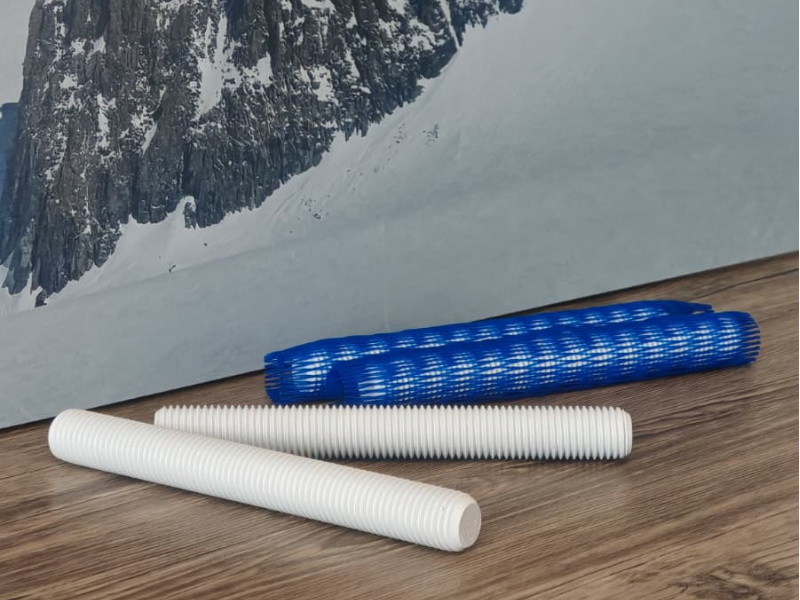
Geomet®
Geomet® is a zinc-flake coating, free from hexavalent chromium. It can be applied by dipping or spraying and provides high corrosion resistance. One of the main advantages of zinc-flake coatings is the absence of hydrogen embrittlement risk, an aspect that is particularly relevant for high-strength fasteners. For this reason, Geomet® is often chosen for components intended for technical and industrial applications where high anti-corrosion performance is required.
Electroless Nickel Plating
Electroless nickel plating is a uniform nickel deposit obtained through an autocatalytic process, without the use of electric current. This treatment offers high corrosion resistance, good surface hardness and uniformity even on complex geometries. It is suitable when the component requires protection, coating precision and deposit continuity even in hard-to-reach areas.
Self-Locking Inserts and Threadlockers
Self-locking inserts are coatings applied to the thread, often made of nylon or deformable materials, and are also available in different colours. Their function is to increase friction between screw and nut, reducing the risk of loosening caused by vibration, impact or dynamic stress. In some applications, threadlocking compounds or equivalent systems may also be used, selected according to the type of assembly and the required level of safety.
Choosing the Most Suitable Treatment
The choice of surface treatment must be carefully assessed, especially when the component is intended for aggressive environments or critical applications. EFS supports the customer in selecting the coating most consistent with the material, sector of use, environmental exposure, assembly requirements and required documentation.
Request Components with Surface Treatment
EFS coordinates supplies of fasteners and fastening systems with surface treatments and technical coatings. For specific requests, technical drawings, specifications, samples or information on the component’s operating environment can be provided.