

Threaded Rods
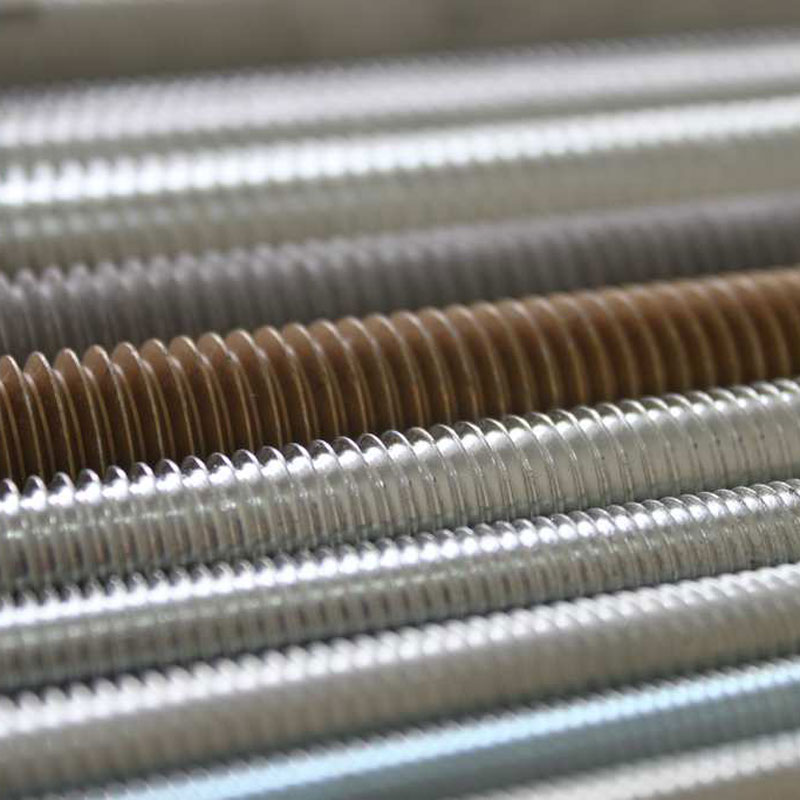
Industrial threaded rods are fastening components characterized by a continuous thread running along the entire length of the component. They are used in steel construction, plant engineering, support systems, industrial structures and Oil & Gas applications where adjustable connections or assemblies with lengths greater than those normally available in standard fasteners are required.
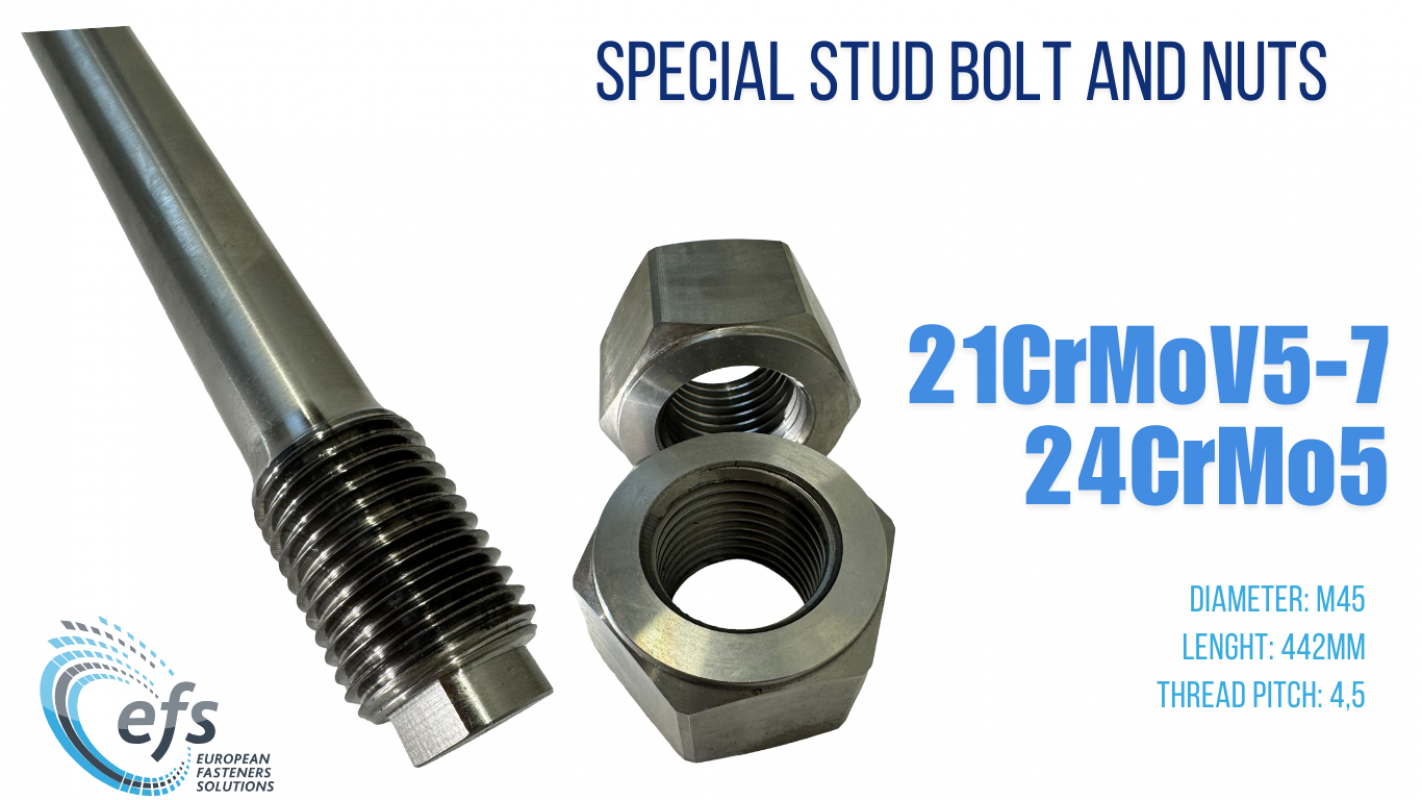
Unlike industrial stud bolts, which are generally identified as components intended for specific plant engineering or structural applications, threaded rods are often supplied in commercial lengths and can be cut or adapted directly during assembly.
In the European industrial market, DIN 975 and DIN 976 metric threaded rods are widely used, while in the Oil & Gas, energy and international plant engineering sectors, inch-size threaded rods manufactured according to ASTM specifications are in high demand.
Characteristics of Industrial Threaded Rods
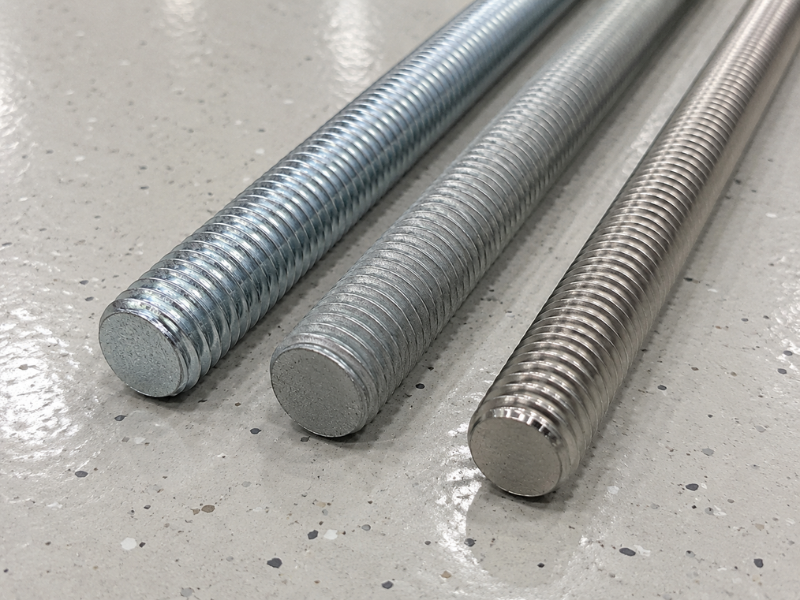
The main characteristic of threaded rods is the continuous thread running along the entire useful length of the component. This configuration allows great flexibility of use and makes it possible to adapt the fastener to assembly requirements directly in the workshop or on site.
Threaded rods are normally used with nuts and washers and can be supplied in different diameters, thread pitches and lengths.
The main configurations include:
- metric threaded rods
- UNC and UNF threaded rods
- coarse-thread threaded rods
- fine-thread threaded rods
- threaded rods cut to size
- threaded rods in commercial lengths
For demanding industrial applications, high-strength materials, dedicated dimensional inspections, certifications and specific surface treatments may be required.
Industrial Applications of Threaded Rods
Threaded rods are used in many industrial sectors thanks to their ease of installation and the possibility of easily adapting the length of the connection.
Steel Construction and Industrial Structures
They are used for bracing systems, adjustment systems, structural fastenings, steel construction connections and civil and industrial installations.
Plant Engineering and Technical Supports
Threaded rods are widely used for pipe supports, brackets, ducting, HVAC systems, cable trays and suspension systems.
Oil & Gas and Energy
In energy and petrochemical plants, inch-size threaded rods manufactured in ASTM materials such as A193 B7, B16 and A320 L7 are frequently used. In these contexts, the availability of certifications, traceability and controlled mechanical properties is an essential requirement.
Machinery and Heavy Industry
Threaded rods are also used in industrial machinery, special equipment, production plants and structures subject to high loads, where a simple but reliable fastening solution is required.
ISO, DIN and ASTM Standards
Metric threaded rods are commonly identified on the market by the DIN 975 reference, a designation still widely used by purchasing departments and in technical specifications. The current reference standard is DIN 976-1, which defines the dimensional characteristics of fully threaded rods.
Metric threads are generally manufactured according to:
- ISO 261
- ISO 965
In the Oil & Gas, energy and international plant engineering sectors, inch-size threaded rods with UNC and UNF threads are widely used, manufactured in ASTM materials such as:
- ASTM A193 B7
- ASTM A193 B16
- ASTM A320 L7
These rods are frequently used in plants, valves and flanged connections designed according to sector-specific ASME/ANSI standards.
The choice between metric and imperial systems normally depends on the plant design standards and the target market.
Main Types of Threaded Rods
Zinc-Plated Steel Threaded Rods
Used in steel construction, plant engineering and industrial construction where standard corrosion protection is required.
Stainless Steel Threaded Rods
Particularly used in humid environments, food industries, chemical plants and outdoor applications.
ASTM Threaded Rods for Oil & Gas
Manufactured in certified materials for energy plants, petrochemical plants and applications characterized by high documentation and performance requirements.
Available Materials
EFS manages supplies of threaded rods in:
- property classes 8.8, 10.9 and 12.9
- 42CrMo4
- 39NiCrMo3
- ASTM A193 B7, B16, L7
- AISI 316
- A4
- B8 Class 2
- Duplex and Super Duplex
Material selection depends on environmental conditions, the required mechanical strength and the possible presence of corrosive agents or high temperatures.
Surface Treatments
Surface protection for threaded rods is defined according to the operating environment and the expected durability of the connection.
The most commonly requested treatments include:
- electrolytic zinc plating
- hot-dip galvanizing
- Geomet®
- Geomet® 500B
- zinc-nickel coating
- black oxide treatment
- phosphating
- stainless steel passivation
In structural and infrastructure applications, as well as in lifting systems, threaded rods with Geomet® 500B coating are frequently required thanks to its high corrosion resistance and absence of hydrogen embrittlement risk.
EFS Capabilities
EFS supports supplies of standard and special threaded rods through a network of qualified Italian and European manufacturers.
The company coordinates certified materials, surface treatments, machining operations and quality controls, also managing oversize diameters, non-standard lengths, special materials and supplies accompanied by EN 10204 3.1 and 3.2 certifications.
Supplies include both metric threaded rods for steel construction and plant engineering, and inch-size threaded rods for the Oil & Gas, energy and process plant engineering sectors.
FAQ
What Is the Difference Between a Threaded Rod and a Stud Bolt?
A threaded rod is generally a standard product supplied in commercial lengths. A stud bolt, on the other hand, is a component intended for a specific industrial application, often manufactured to size and accompanied by dedicated technical documentation.
What Is the Difference Between DIN 975 and DIN 976?
DIN 975 is the designation historically used to identify metric threaded rods. The current reference standard is DIN 976-1, which defines their dimensional characteristics.
Which Materials Are Used for Oil & Gas Threaded Rods?
The most commonly requested materials are ASTM A193 B7, ASTM A193 B16 and ASTM A320 L7, selected according to the operating conditions, temperature and plant specifications.