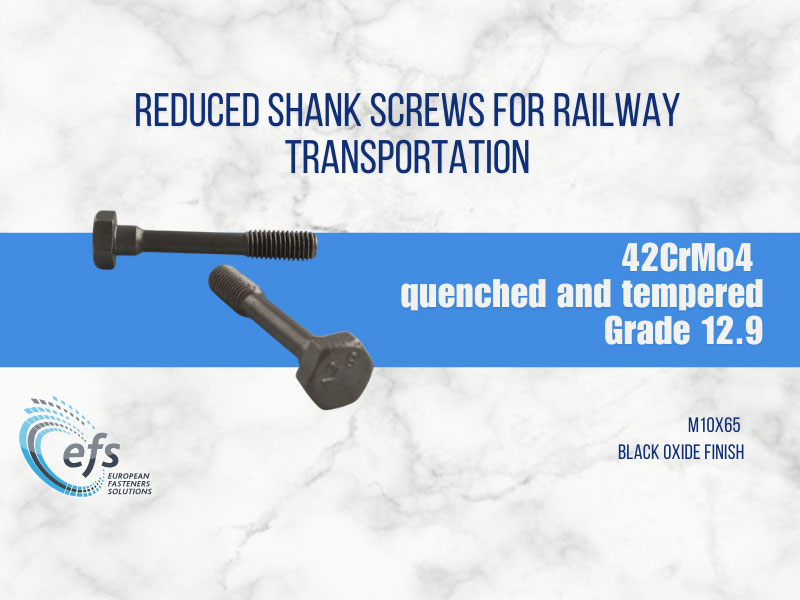


Industrial UNI and DIN Threaded Studs
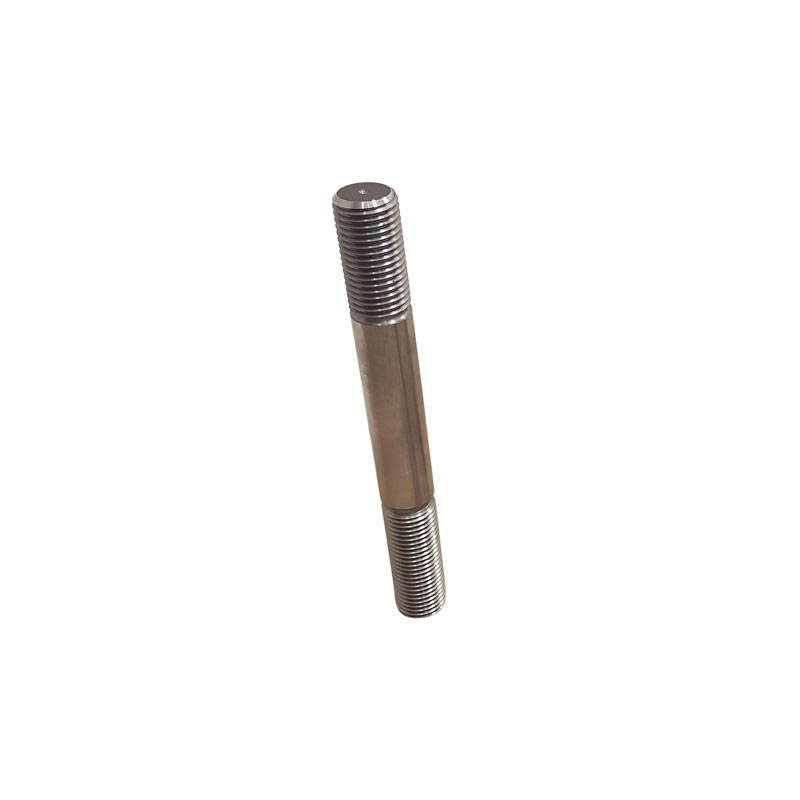
Industrial threaded studs are fastening components characterized by threads at both ends and designed to create removable connections between multiple mechanical components.
Unlike threaded rods, which are generally supplied in commercial lengths and adapted during assembly, threaded studs are normally sized for a specific application and remain installed in the main component during maintenance operations. This characteristic helps preserve the threads of the machine body and ensures greater reliability in repeated assemblies.
For this reason, threaded studs are widely used in the machinery sector, machine tools, transmission systems, energy equipment, pumps, compressors and industrial plants subject to frequent maintenance.
In addition to standardized UNI and DIN versions, many applications require special made-to-drawing threaded studs with specific materials, geometries and treatments. EFS supports standard and custom supplies with certified European production, traceable materials and dedicated quality controls.

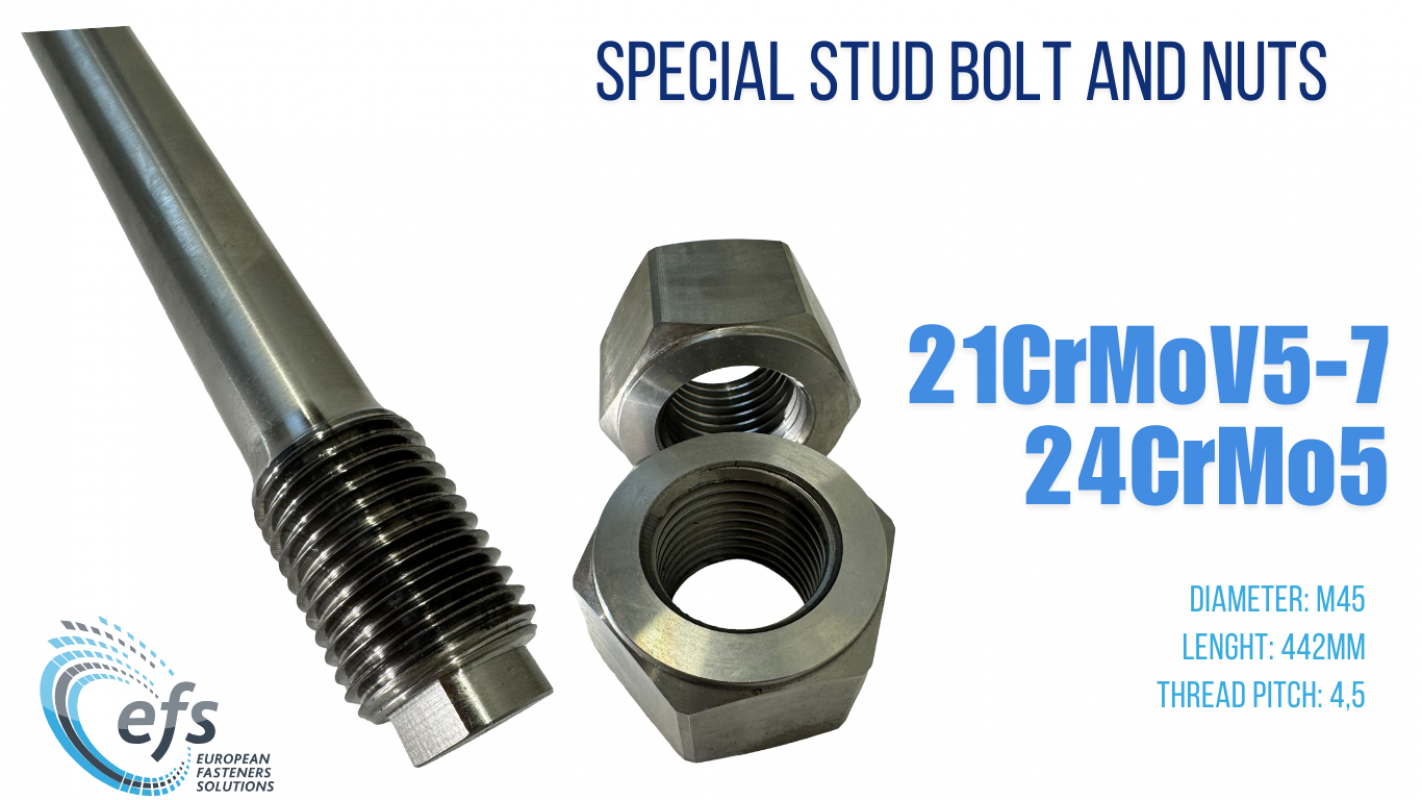
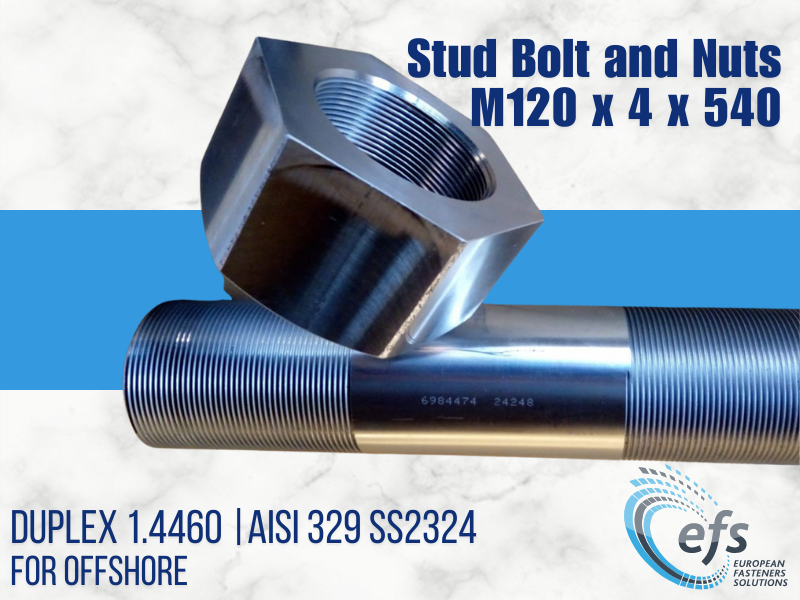
Characteristics of Industrial Threaded Studs
Threaded studs are designed to create reliable mechanical connections in applications subject to static loads, dynamic loads and repeated maintenance cycles.
The typical configuration includes:
- threads on both ends
- smooth or partially machined central section
- permanent installation in the main component
- tightening by means of a nut on the free end
Compared to traditional screws, this solution reduces wear on the threads in machine bodies and simplifies disassembly and reassembly operations during maintenance.
In the most demanding applications, thread quality, concentricity, dimensional tolerances and component fatigue resistance are particularly important.
Industrial Applications of Threaded Studs
Machine Tools
Threaded studs are used for fastening bases, slides, spindle assemblies, clamping systems and components subject to continuous vibration.
In these contexts, dimensional accuracy, tightening stability and thread fatigue resistance are particularly important. EFS has recently supplied special M8 x 104.25 mm threaded studs in quenched and tempered 39NiCrMo3, property class 10.9, with rolled thread and electroless nickel plating, intended for high-stress machine tools.
Machinery and Power Transmission
Gearboxes, presses, couplings, transmission systems and automatic machines frequently use threaded studs to ensure reliable connections in the presence of vibration, alternating loads and continuous duty cycles.
Energy and Industrial Plant Engineering
Nuclear plants, turbines, pumping units, compressors and industrial equipment use threaded studs to ensure repeatable assemblies and safe maintenance over time.
Machinery and Heavy Steel Construction
Stud bolts are also used in industrial machinery, metal construction and structures subject to high loads. Large diameters, special lengths and dedicated machining operations make it possible to produce components suitable for demanding operating conditions, where dimensional accuracy and connection reliability are decisive.
Paper Mills, Packaging and Process Plants
In plants characterized by continuous operation and scheduled shutdowns, threaded studs allow faster maintenance operations and greater protection of the threads of the main components.
UNI and DIN Standards for Threaded Studs
In the Italian market, threaded studs are frequently identified through UNI standards historically used in technical departments and manufacturing drawings.
The main references include:
- UNI 5909
- UNI 5910
- UNI 5911
- UNI 5914
At international level, the most widely used standards include:
- DIN 835
- DIN 938
- DIN 939
These standards define different geometric configurations, screw-in lengths and proportions of the threaded ends according to the application and the mating material.
For special applications, however, the threaded stud is often manufactured to drawing without direct reference to a specific standard.
Main Types of Threaded Studs
Standard UNI and DIN Threaded Studs
When the project requires specific strength, space or assembly requirements, the threaded stud is manufactured according to customer specifications.
Customizations may involve:
- special lengths
- non-standard diameters
- special threads
- relief grooves
- differentiated diameters
- dedicated markings
- specific surface treatments
The supplies managed by EFS also include oversize threaded studs up to M64 x 2850 mm, intended for highly critical industrial applications such as wind turbine blades.
Made-to-Drawing Threaded Studs
When the project requires specific strength, space or assembly requirements, the threaded stud is manufactured according to customer specifications.
Customizations may involve:
- special lengths
- non-standard diameters
- special threads
- relief grooves
- differentiated diameters
- dedicated markings
- specific surface treatments
The supplies managed by EFS also include oversize threaded studs up to M64 x 2850 mm, intended for highly critical industrial applications such as wind turbine blades.
High-Strength Threaded Studs
Manufactured in property classes 8.8, 10.9 and 12.9, or in quenched and tempered alloy steels for applications subject to high static and dynamic stress.
Stainless Steel and Special Alloy Threaded Studs
Used in corrosive environments, chemical plants, offshore and energy applications, and applications where corrosion resistance is a fundamental requirement.
Rolled Threads and Fatigue Resistance
In threaded studs intended for dynamic applications, the geometry of the thread root plays a decisive role in the service life of the component.
The thread root is one of the main stress concentration points and often represents the most critical area in fatigue phenomena.
For this reason, many machinery applications require threads produced by cold rolling rather than by material removal. Thread rolling makes it possible to maintain the continuity of the material fibres and generate residual compressive stresses in the thread root, improving fatigue resistance and delaying the formation of microcracks.
This technology is frequently used for threaded studs intended for machine tools, transmission systems and equipment subject to vibration and cyclic loads.
Available Materials
EFS manages supplies of threaded studs in:
- property class 8.8
- property class 10.9
- property class 12.9
- 42CrMo4
- 39NiCrMo3
- 34CrNiMo6
- ASTM A193 B7, B16, L7
- AISI 304
- AISI 316
- A4
- Duplex and Super Duplex
- Inconel
- Hastelloy
Material selection depends on the operating conditions, mechanical stress and working environment.
Surface Treatments
Surface treatments play a decisive role in corrosion protection and in the durability of the connection.
The most commonly requested include:
- electrolytic zinc plating
- hot-dip galvanizing
- zinc-nickel coating
- Geomet®
- Geomet® 500B
- electroless nickel plating
- phosphating
- black oxide treatment
- stainless steel passivation
In the machinery sector, electroless nickel plating and zinc-nickel coatings are particularly widespread, selected to ensure uniform protection, dimensional accuracy and resistance to aggressive agents present in production environments.
EFS Capabilities
EFS coordinates supplies of standard and special threaded studs through a network of qualified Italian and European manufacturers.
The company supports complete order management:
- material selection
- heat and surface treatments
- rolled threads
- CNC machining
- dimensional inspections
- non-destructive testing
- EN 10204 3.1 and 3.2 certifications
Supplies include both highly customized small batches and repeat production for OEMs, machine manufacturers and industrial plant engineering.
FAQ
What Is the Difference Between a Threaded Stud and a Threaded Rod?
A threaded rod is generally a standard product supplied in commercial lengths. A threaded stud, on the other hand, is a component designed to be permanently installed in the machine body, allowing repeated maintenance operations without wearing the thread of the main component.
When Is It Advisable to Use a Rolled Thread?
Rolled thread is selected in applications subject to vibration, alternating loads and fatigue phenomena because it improves the mechanical strength of the thread root and increases the service life of the component.
Is It Possible to Manufacture Made-to-Drawing Threaded Studs?
Yes. Threaded studs can be manufactured according to customer specifications, with customized diameters, lengths, materials, threads and treatments, including oversize supplies for critical industrial applications.