

Industrial Anchor Bolts for Foundations and Structures
Industrial anchor bolts are anchoring components used to connect metal structures, machinery and plants to concrete foundations.
Their function is to safely transfer static and dynamic loads from the structure to the anchoring base, ensuring stability, positioning accuracy and long-term reliability.
Unlike threaded rods, threaded studs and stud bolts, anchor bolts are specifically designed to be embedded or anchored within the foundation, becoming an integral part of the structural system.
The most common applications include steel construction, industrial plants, machine tools, cranes, energy structures and infrastructure subject to high loads or continuous vibration.
Characteristics of Industrial Anchor Bolts
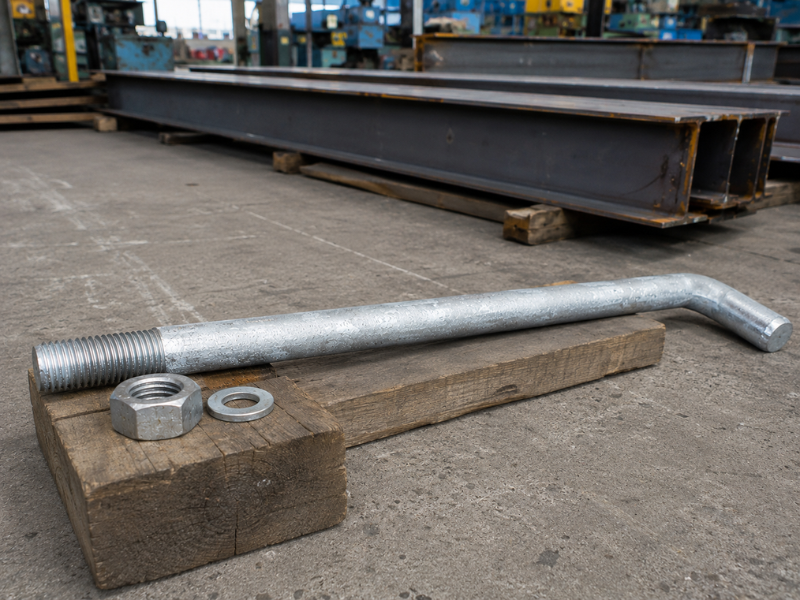
The typical configuration of an anchor bolt includes a threaded section intended for tightening by means of a nut, and a lower end designed to ensure proper anchoring in concrete.
Depending on the application, they may include:
- bent ends
- anchoring hooks
- welded plates
- positioning lock nuts
- assembly templates
Dimensions, anchoring length and geometric configuration are defined according to the loads to be absorbed, the characteristics of the foundation and installation requirements.
In the most demanding industrial applications, material quality, dimensional accuracy and correct execution of machining operations and any welding processes are particularly important.
Industrial Applications of Anchor Bolts
Steel Construction
Anchor bolts are used to anchor columns, pillars, load-bearing structures and heavy steel constructions installed on concrete foundations.
Correct design of the anchoring system contributes to the stability of the entire structure and to the transfer of loads to the foundation.
Industrial Machinery
Presses, machine tools, production lines and industrial equipment often require dedicated anchor bolts to ensure positioning accuracy and resistance to vibration.
Energy and Plant Engineering
Anchor bolts are used for anchoring skids, pumps, compressors, generator sets, process equipment and support structures intended for energy and industrial plants.
Cranes and Infrastructure
Applications in the crane, lifting and infrastructure sectors often require large-size anchor bolts designed to withstand high loads and severe operating conditions.
Standards and Technical References
Unlike other standardized fastening components, anchor bolts are frequently manufactured according to drawings or project specifications. For this reason, there is no single geometric standard universally adopted for all available configurations.
The design of anchoring systems may refer to dedicated structural standards, such as Eurocode EN 1992-4 for anchors in concrete, while materials, mechanical classes and threads are generally defined through specific standards such as:
- EN ISO 898-1
- ISO 261
- ISO 965
- ASTM A193 B7
- ASTM A193 B16
Dimensions, anchoring lengths and final geometries are normally established by the designer according to the loads and operating conditions.
Main Types of Anchor Bolts
L-Shaped Anchor Bolts
These are the most common configuration in industrial and structural applications. The bent end helps improve pull-out resistance from concrete.
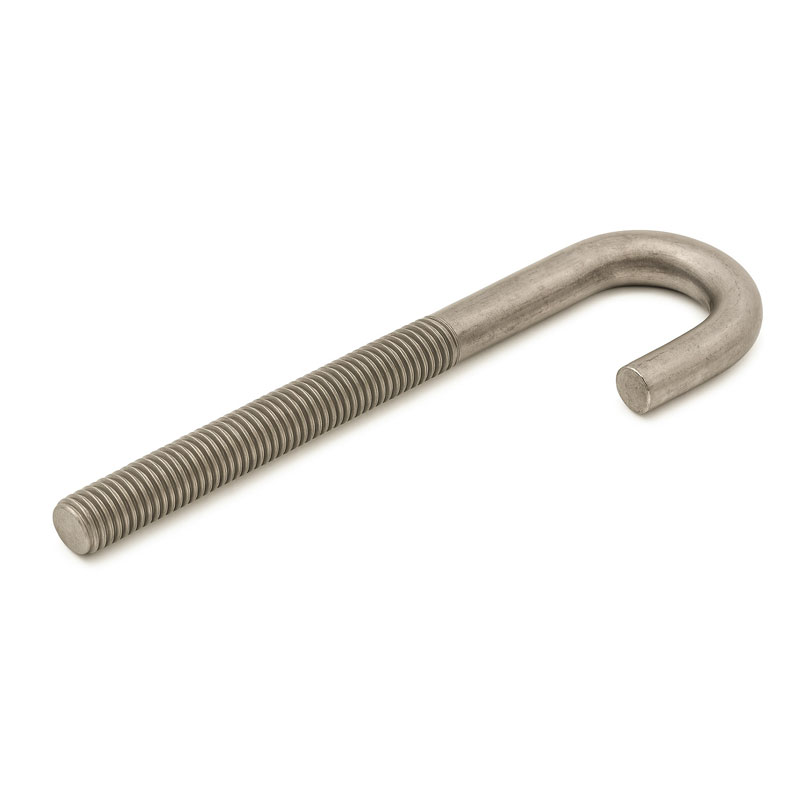
J-Shaped Anchor Bolts
Used when the project requires particular geometric configurations or specific installation requirements.
Anchor Bolts with Anchor Plate
The presence of a welded or assembled plate at the lower end increases the anchoring surface and improves load distribution within the foundation.
Made-to-Drawing Anchor Bolts
In most industrial applications, anchor bolts are manufactured according to customer specifications.
Customizations may involve:
- special diameters
- non-standard lengths
- particular threads
- dedicated anchor plates
- certified welds
- specific positioning systems
Available Materials
EFS manages supplies of anchor bolts in:
- property class 8.8
- property class 10.9
- 42CrMo4
- 39NiCrMo3
- ASTM A193 B7
- ASTM A193 B16
- AISI 304
- AISI 316
- A4
- Duplex
- Super Duplex
Material selection depends on structural requirements, the installation environment and project specifications.
Surface Treatments
Anchor bolts can be supplied with different surface treatments depending on the environmental conditions and the required durability.
The most commonly used include:
- electrolytic zinc plating
- hot-dip galvanizing
- Geomet®
- Geomet® 500B
- zinc-nickel coating
- black oxide treatment
- stainless steel passivation
For outdoor installations, marine environments or infrastructure subject to corrosion, high-corrosion-protection coatings are frequently required.
EFS Capabilities
EFS supports supplies of standard and special anchor bolts through a network of qualified Italian and European manufacturers.
The company coordinates certified materials, machining operations, bending, welding, surface treatments and dimensional inspections, also managing non-standard diameters and lengths.
Supplies are available with EN 10204 3.1 certifications and, on request, 3.2 certifications, dedicated dimensional inspections and specific technical documentation for industrial and infrastructure applications.
FAQ
What Is the Difference Between an Anchor Bolt and a Threaded Rod?
A threaded rod is a general-purpose fastening component. An anchor bolt, on the other hand, is specifically designed for anchoring structures and machinery to a concrete foundation.
What Are the Most Common Types of Anchor Bolts?
The most common configurations are L-shaped anchor bolts, J-shaped anchor bolts and anchor bolts with anchor plates.
Is It Possible to Manufacture Made-to-Drawing Anchor Bolts?
Yes. Most industrial anchor bolts are manufactured according to project specifications that define geometry, length, material, anchoring system and surface treatments.