


Cross-Drilled Hexagon Head Bolts for Railway Applications

Cross-drilled hexagon head bolts can be used in mechanical joints that require safety wire to prevent accidental loosening. The hole can also accommodate a tamper-evident seal.
In railway applications, certain bolted joints are exposed to vibration and cyclic loads. Therefore, bolt geometry and mechanical properties must meet specific design requirements.
Two bolts supplied by EFS for the railway sector provide a practical example. Both have cross-drilled hexagon heads and partially threaded shanks. At first glance, they look almost identical. However, they have six technical differences. Some are visible, while others can only be verified through technical specifications and process documentation.
What Is the Purpose of a Cross-Drilled Hexagon Head?
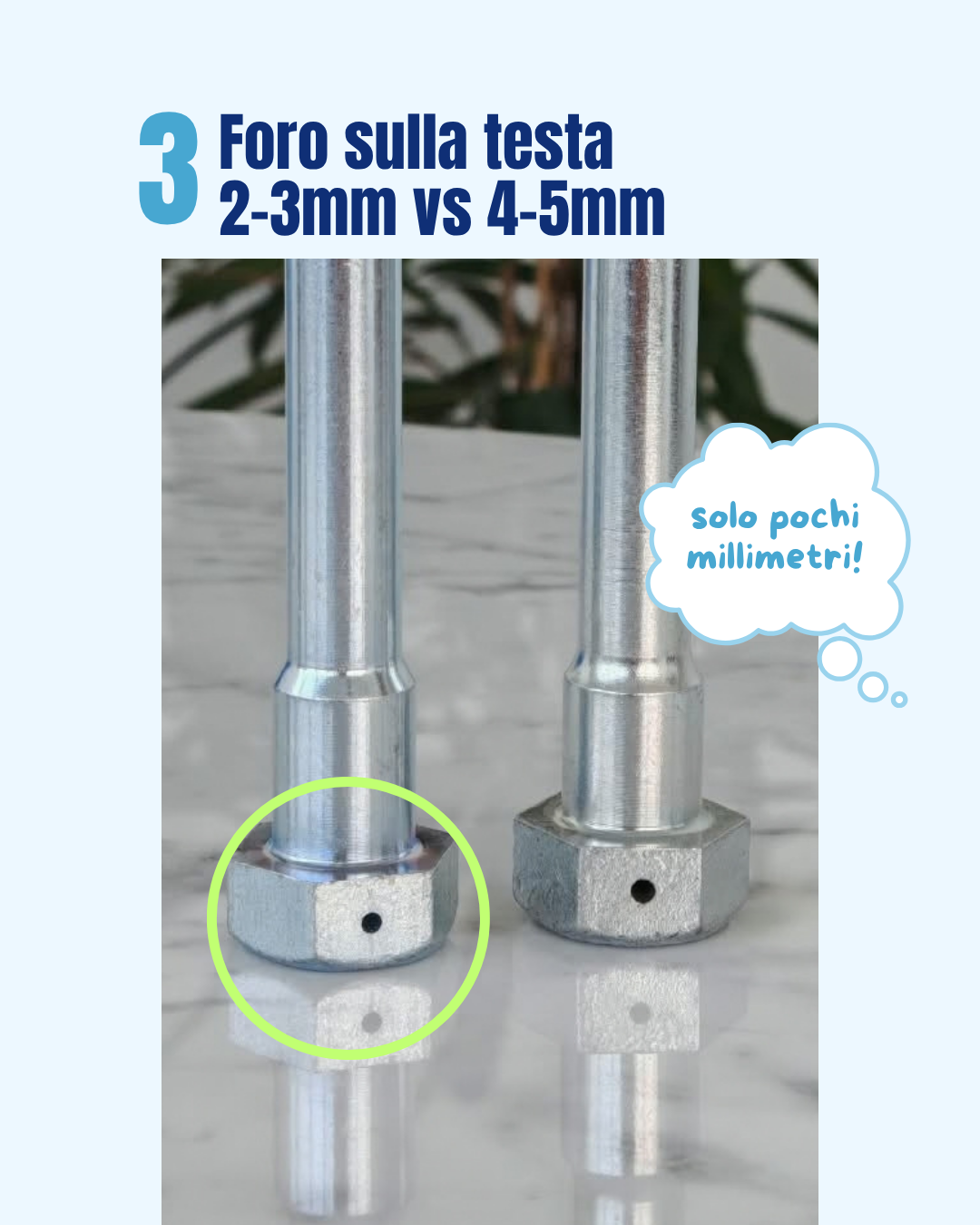
The transverse hole in a hexagon bolt head can accommodate safety wire, a mechanical locking method used in bolted joints exposed to vibration.
The wire passes through the hole and is secured to another bolt or a suitable anchor point. When correctly installed, it restricts rotation in the loosening direction. This reduces the risk of accidental unscrewing. However, safety wire does not replace correct initial tightening or guarantee that the required preload will be maintained.
Both bolts supplied by EFS have a cross-drilled hexagon head, but the hole diameters differ: approximately 2–3 mm on one bolt and 4–5 mm on the other.
The hole can also serve another purpose: the installation of a tamper-evident seal. In this case, a sealed wire or cable helps reveal unauthorised interference following inspection or maintenance.
The hole diameter and position must therefore comply with the technical drawing. They must also be compatible with the intended locking or sealing system.
How Do the Geometry and Dimensions Differ?
The cross-drilled head is only one of the differences between these two railway fasteners.
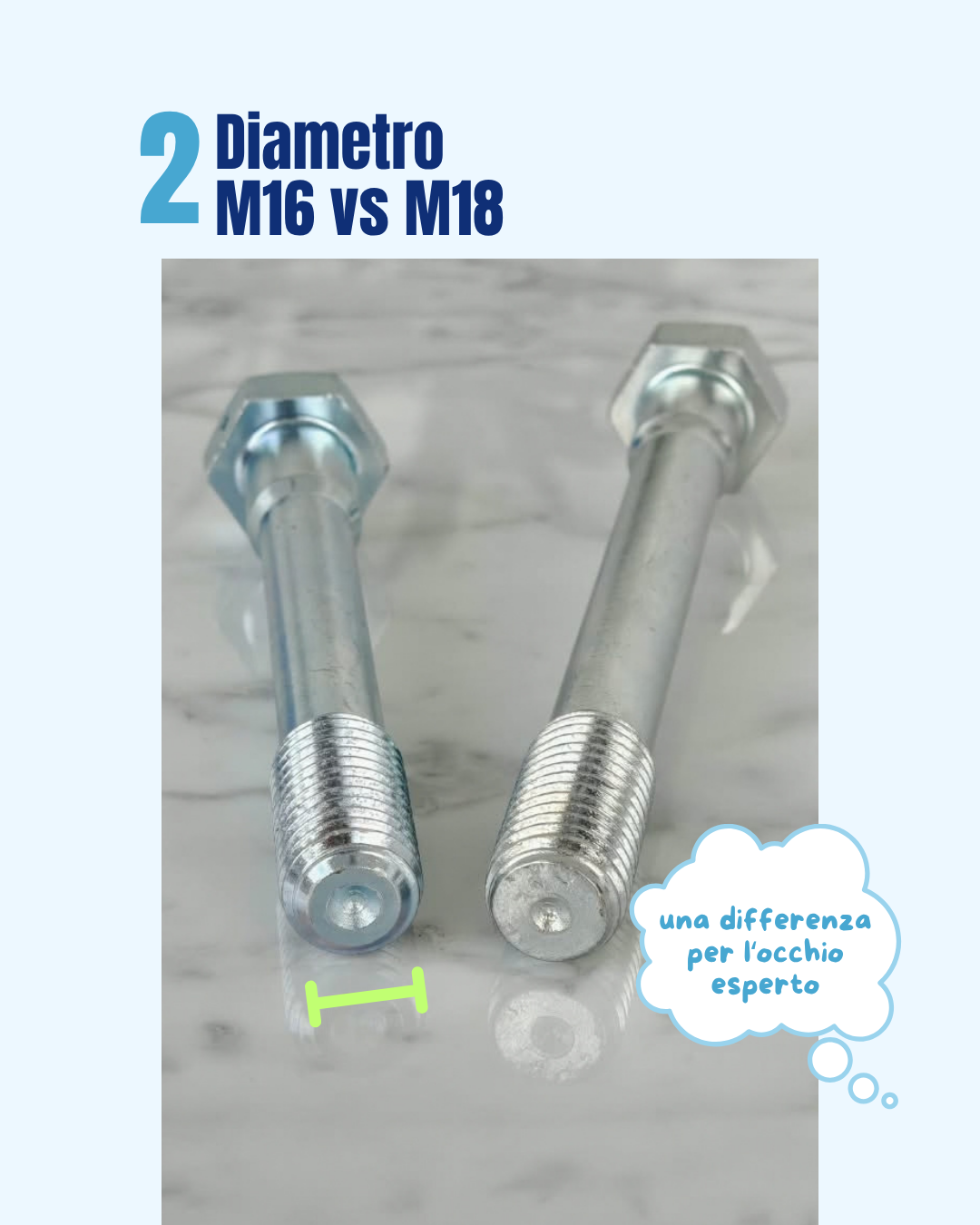
The first bolt has a nominal diameter of M16 and a length of 130 mm. The second measures M18 × 152 mm. Consequently, their load-bearing cross-sections, mating hole dimensions and overall joint dimensions differ.
Both bolts are partially threaded. The length of the unthreaded shank must match the joint geometry, particularly when the design requires the plain shank to pass through specific shear planes.
For further information on this configuration and the relevant dimensional standards, see the EFS page dedicated to industrial hexagon head bolts.
Strength Grades of the Two Cross-Drilled Hexagon Head Bolts
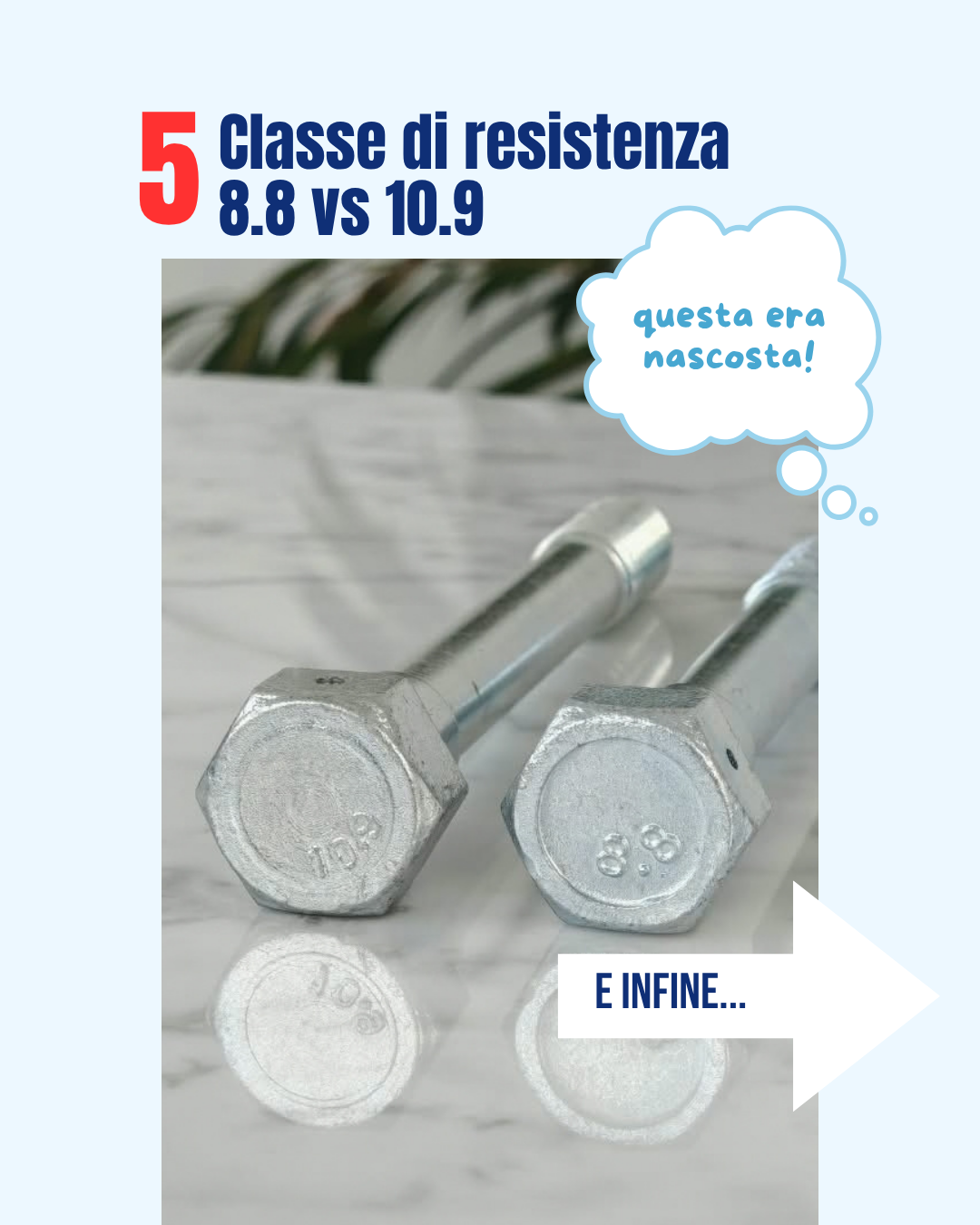
Besides their geometric differences, the two bolts have another less obvious distinguishing feature: their strength grade.
One bolt is property class 8.8, while the other is property class 10.9, according to ISO 898-1.
The nominal tensile strength increases from 800 MPa for class 8.8 to 1,000 MPa for class 10.9. Their yield strength values and mechanical requirements also differ.
However, a higher strength grade is not automatically the better choice. Selection depends on the expected loads, the required preload, the joint geometry and the operating conditions.
For bolted joints exposed to vibration, mechanical strength must also be assessed alongside fatigue performance and the ability of the joint to maintain adequate clamping force.
Bright and Iridescent Zinc Plating: What Is the Difference?
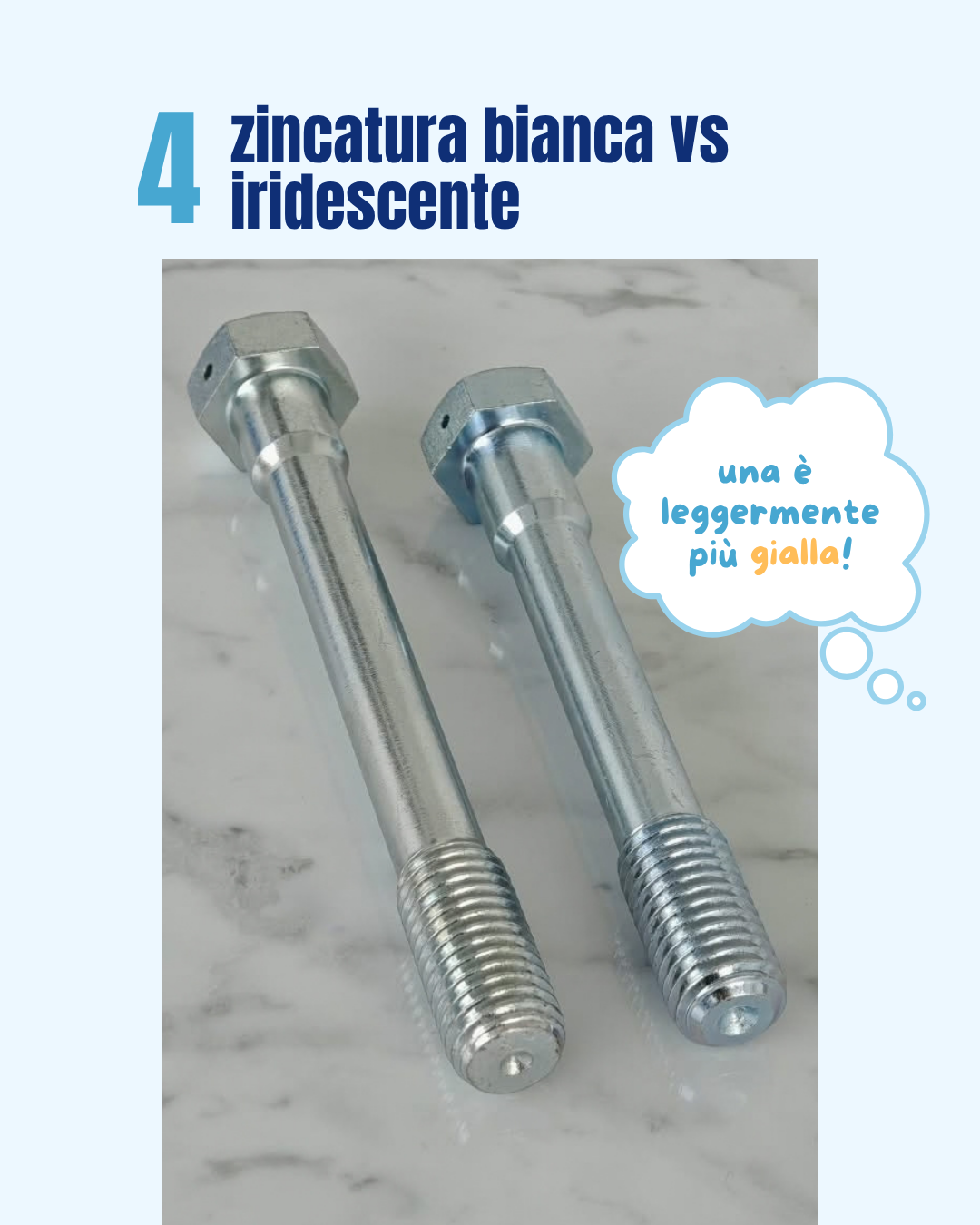
Another visible difference between the two cross-drilled hexagon head bolts concerns their surface finish.
One has a bright zinc electroplated finish, while the other has an iridescent zinc finish with a slightly yellowish appearance.
Zinc electroplating protects steel against corrosion by depositing a layer of zinc onto its surface. The final colour mainly depends on the conversion treatment applied afterwards.
However, the difference in colour alone does not establish which coating offers better corrosion resistance.
To compare their performance, it is necessary to consider the zinc coating thickness, the type of passivation, any additional sealers and the technical specification requirements. Surface friction characteristics must also be considered when they affect the relationship between tightening torque and bolt preload.
An EFS case study exploring these aspects concerns zinc-plated B7 threaded rods and 2H nuts with an iridescent finish. This supply required zinc electroplating in accordance with ASTM B633 Fe/Zn 12 Type II.
For the two railway bolts, the difference in surface finish is accompanied by a difference in strength grade. Together, these characteristics introduce a further technical requirement that cannot be identified by inspecting the finished components.
Hydrogen Embrittlement Relief for Class 10.9 Bolts: The Invisible Difference
The sixth difference concerns a treatment specified for the class 10.9 bolt: hydrogen embrittlement relief baking.
During certain surface preparation and electroplating operations, hydrogen can enter the steel. In susceptible fasteners, particularly those under tensile stress, hydrogen can cause embrittlement and lead to delayed fracture.
Susceptibility depends mainly on mechanical strength, hardness, stress conditions and the manufacturing process.
To reduce this risk, specific process controls can be implemented. Where required, a controlled heat treatment, commonly known as hydrogen embrittlement relief baking, can also be carried out. This helps remove diffusible hydrogen from the steel.
ISO 4042:2022, which covers electroplated coating systems for fasteners, specifies preventive measures according to the mechanical properties of the components.
For property class 10.9, the standard requires additional process or product verification and/or hydrogen embrittlement relief treatment, depending on the applicable conditions. The same additional measures are not normally required for property class 8.8.
In the case of the two EFS bolts, hydrogen embrittlement relief baking is specified as necessary for the class 10.9 component.
Unlike the other five characteristics, this treatment cannot be identified through visual inspection. When required, its completion must be verified through the relevant process documentation.
For another practical example, see the EFS case study on Torx screws for heavy-duty vehicles and agricultural machinery. It compares components with different surface treatments, including zinc electroplating and hydrogen embrittlement relief.
Six Differences, One Common Requirement: Compliance with the Drawing
These two railway bolts demonstrate how seemingly similar fasteners can have very different technical requirements.
EFS manages such supplies as the main contractor. It reviews the specifications, selects suitable manufacturers and production processes, coordinates machining and surface treatments, and verifies that the components meet the agreed requirements.
For cross-drilled hexagon head bolts, this means checking dimensions, hole geometry, strength grade, coating characteristics and any specified treatments.
Five differences can be observed or measured on the finished components. The sixth requires verification of the manufacturing process.
For more information or specific inquiries, our team is at your disposal
TEL. +39 031 2498999 | E-MAIL info@efsfasteners.com

