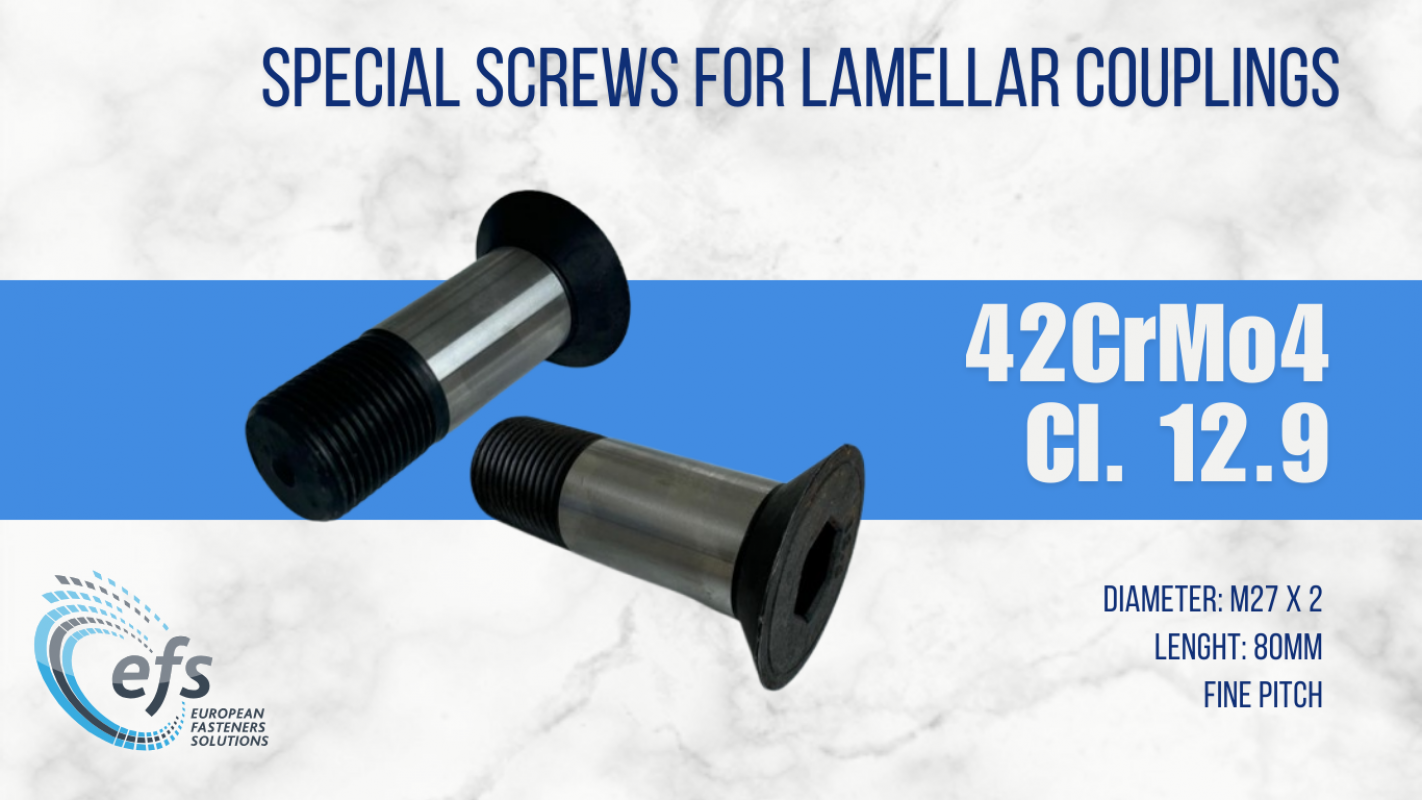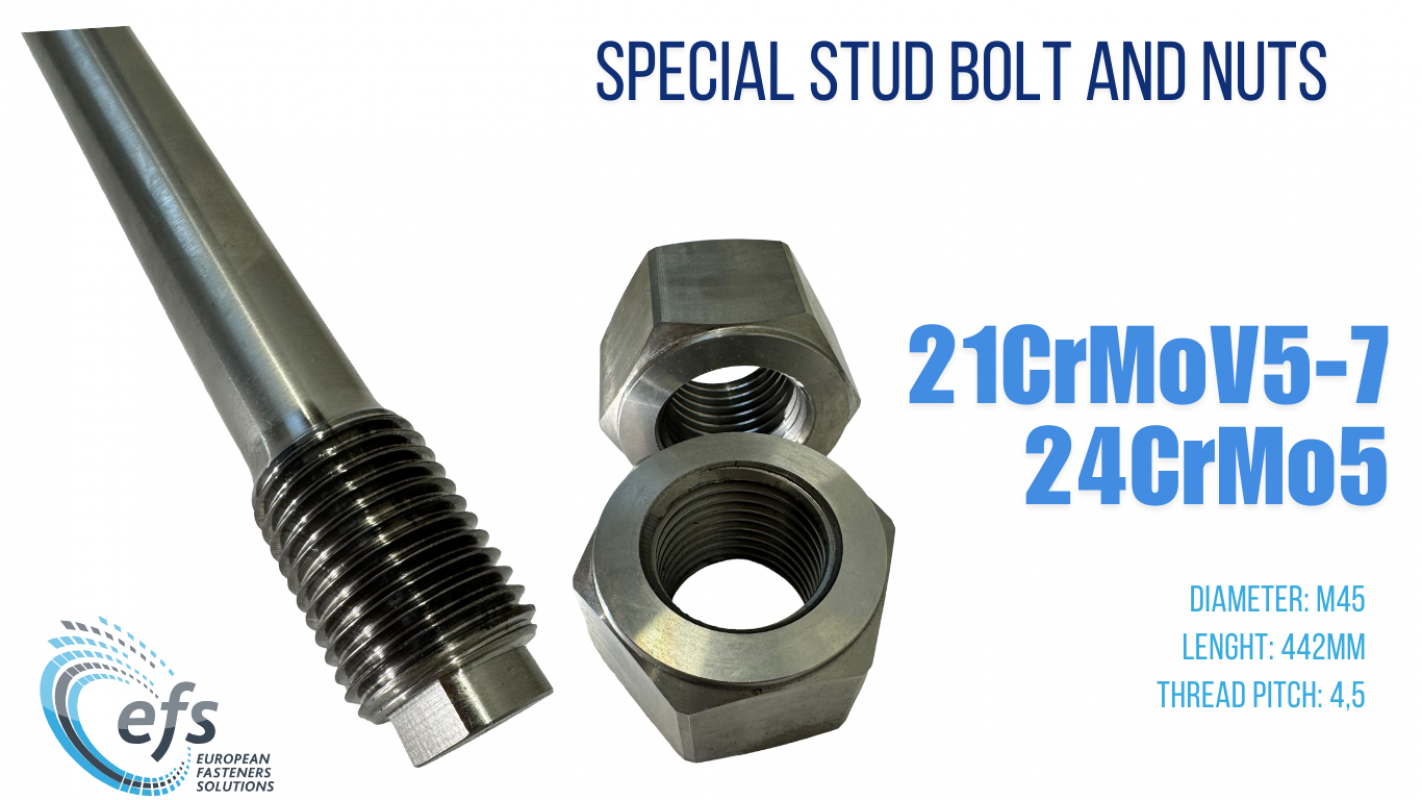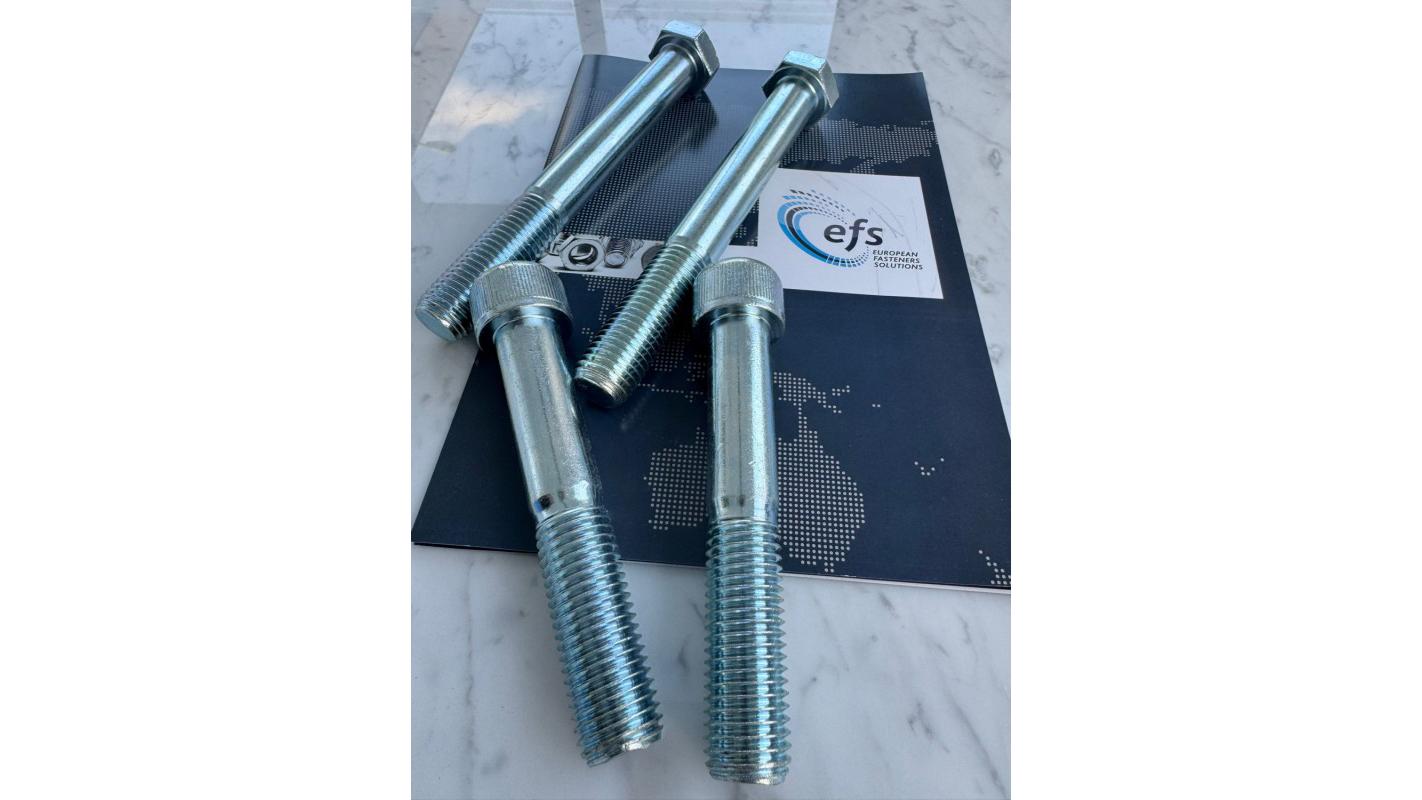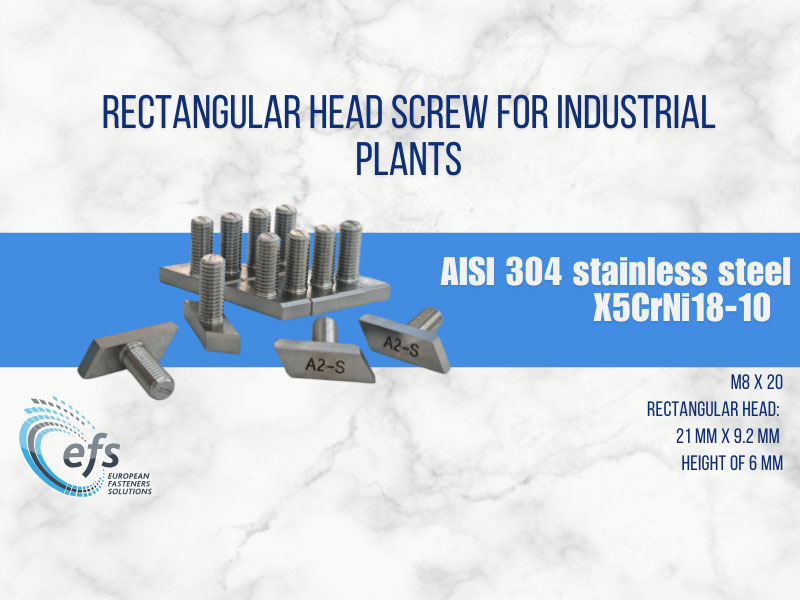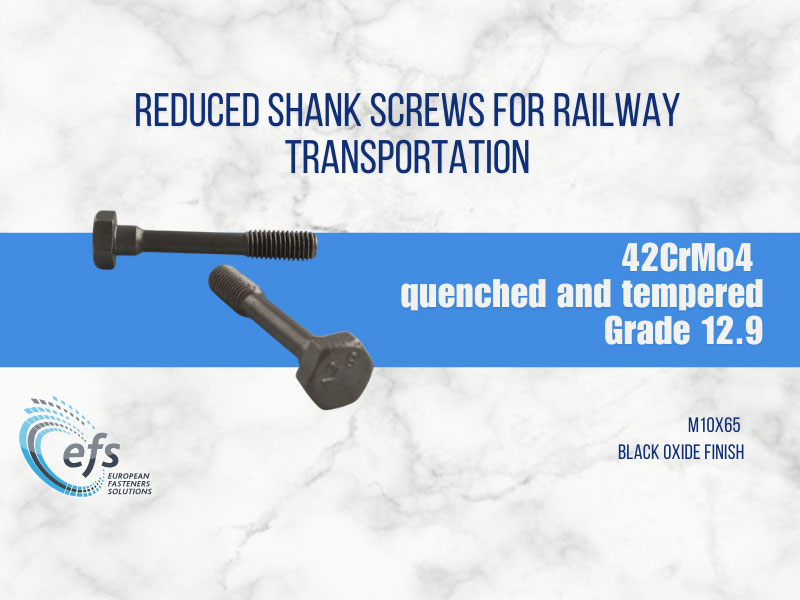


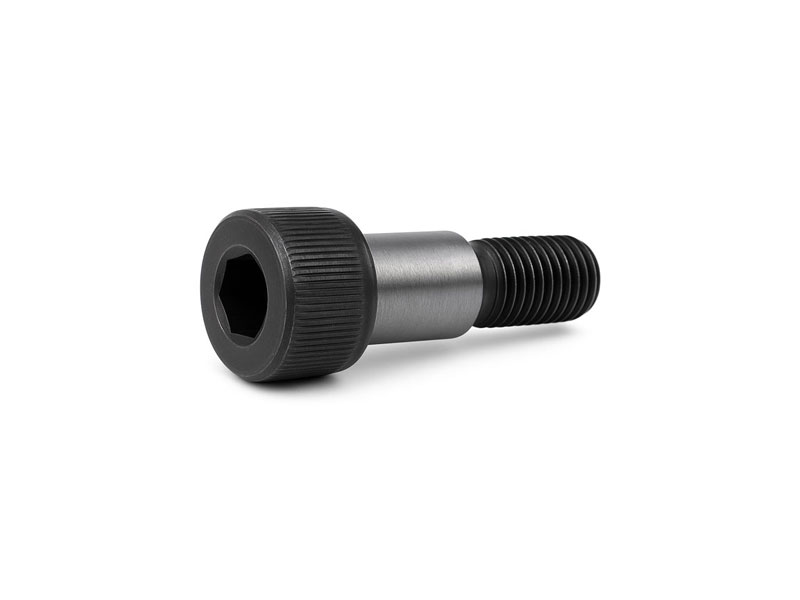
Double-diameter screws are fastening components designed with two sections of different diameters along the same axis. This configuration makes it possible to integrate functions into a single component that would otherwise require additional machining operations or the use of several separate elements.
Unlike standard fasteners, double-diameter screws are frequently developed according to the needs of the application, combining coupling, centring, guiding or tightening areas within the same component.
For this reason, they are used in industrial machinery, mechanical assemblies, transmission systems, energy plants and equipment where dimensional accuracy and connection reliability are essential requirements.
Characteristics of Double-Diameter Screws
The distinctive feature of these screws is the presence of two different diameters on the same component.
The dimensional variation may involve the shank, the threaded sections or specific functional surfaces designed to perform different tasks within the assembly.
This solution makes it possible to:
- combine fastening and centring functions;
- create differentiated couplings;
- optimize system space requirements;
- reduce the number of required components;
- improve load distribution;
- facilitate the assembly of complex mechanical groups.
Dimensional tolerances often play a decisive role, especially when the component contributes to the correct alignment of moving parts.
Industrial Applications of Double-Diameter Screws
Double-diameter screws are used in applications where a standard screw cannot meet all the required functional requirements at the same time.
The main sectors of use include:
- machinery and machine tools;
- gearboxes and transmission systems;
- packaging plants;
- railway sector;
- heavy-duty automotive applications;
- energy plants;
- Oil & Gas;
- cranes and lifting systems.
In many cases, the component performs fastening, centring and positioning functions at the same time, contributing to the overall precision of the assembly.
Available Geometries and Configurations
Double-diameter screws can be manufactured with different configurations according to the project specifications.
The most common solutions include:
- shank with differentiated diameters;
- double thread with different diameters;
- combination of plain and threaded sections;
- standard or fine metric pitches;
- metric and imperial combinations;
- geometries with centring seats or shoulders.
The final configuration depends on the functions that the fastener must perform within the mechanical system.
ISO, DIN and UNI Standards
Double-diameter screws generally do not correspond to a single specific dimensional standard.
Whenever possible, head geometries, threads and dimensional characteristics are developed by taking ISO, DIN or UNI standards relating to the individual parts of the component as references.
Design therefore requires a specific assessment of the functional dimensions, tolerances and expected operating conditions.
Available Materials
Material selection depends on the level of mechanical stress and the operating environment.
The most commonly used materials include:
- 42CrMo4
- 39NiCrMo3
- 34CrNiMo6
- 30CrNiMo8
- steels in property classes 8.8, 10.9 and 12.9
- A2 and A4 stainless steel
- Duplex
- Super Duplex
- ASTM A193 B7
- ASTM A193 B16
- Inconel
- Hastelloy
For applications subject to high loads, quenched and tempered alloy steels are frequently used.
Surface Treatments
Surface treatments are selected according to environmental conditions and the required durability of the component.
The most commonly used include:
- electrolytic zinc plating;
- hot-dip galvanizing;
- Geomet®;
- zinc-nickel coating;
- black oxide treatment;
- phosphating;
- electroless nickel plating;
- anti-friction coatings;
- thread locking systems applied to the thread.
The correct choice of treatment contributes to corrosion protection and tightening stability over time.
EFS Capabilities
Double-diameter screws are among the components frequently developed for specific technical applications.
EFS supports supplies intended for highly complex industrial sectors, coordinating production through qualified Italian and European suppliers and managing the entire process, from material selection through to final inspections.
Supplies may include:
- machining from bar stock or formed blanks;
- CNC turning;
- thread rolling;
- heat treatments;
- surface treatments;
- dimensional inspections;
- EN 10204 3.1 and 3.2 certificates;
- full material traceability.
FAQ
When Are Double-Diameter Screws Used?
They are used when the fastener must perform tightening, centring or positioning functions at the same time, which cannot be achieved with a standard screw.
Are Double-Diameter Screws Standardized?
There is no specific standard defining all possible configurations. The geometries are generally developed according to the requirements of the application.
Is It Possible to Manufacture Double-Diameter Screws with Different Threads?
Yes. In many applications, combinations of different diameters, pitches or threads are used to meet specific functional requirements.
Which Sectors Use Double-Diameter Screws the Most?
Machinery, Oil & Gas, energy, heavy-duty automotive, railway, industrial plant engineering and transmission systems are among the main sectors that use this type of fastener.