

Industrial flanged screws are fastening components designed to distribute the tightening load over a larger surface area than traditional hex head screws. The integrated flange helps reduce surface pressure, improve joint stability and, in many cases, eliminate the need for separate washers.
Thanks to these characteristics, flanged screws are used in applications subject to vibration, dynamic loads and continuous duty cycles. They are particularly widespread in the heavy-duty automotive, agricultural machinery, earthmoving, machinery, power transmission and industrial plant engineering sectors.
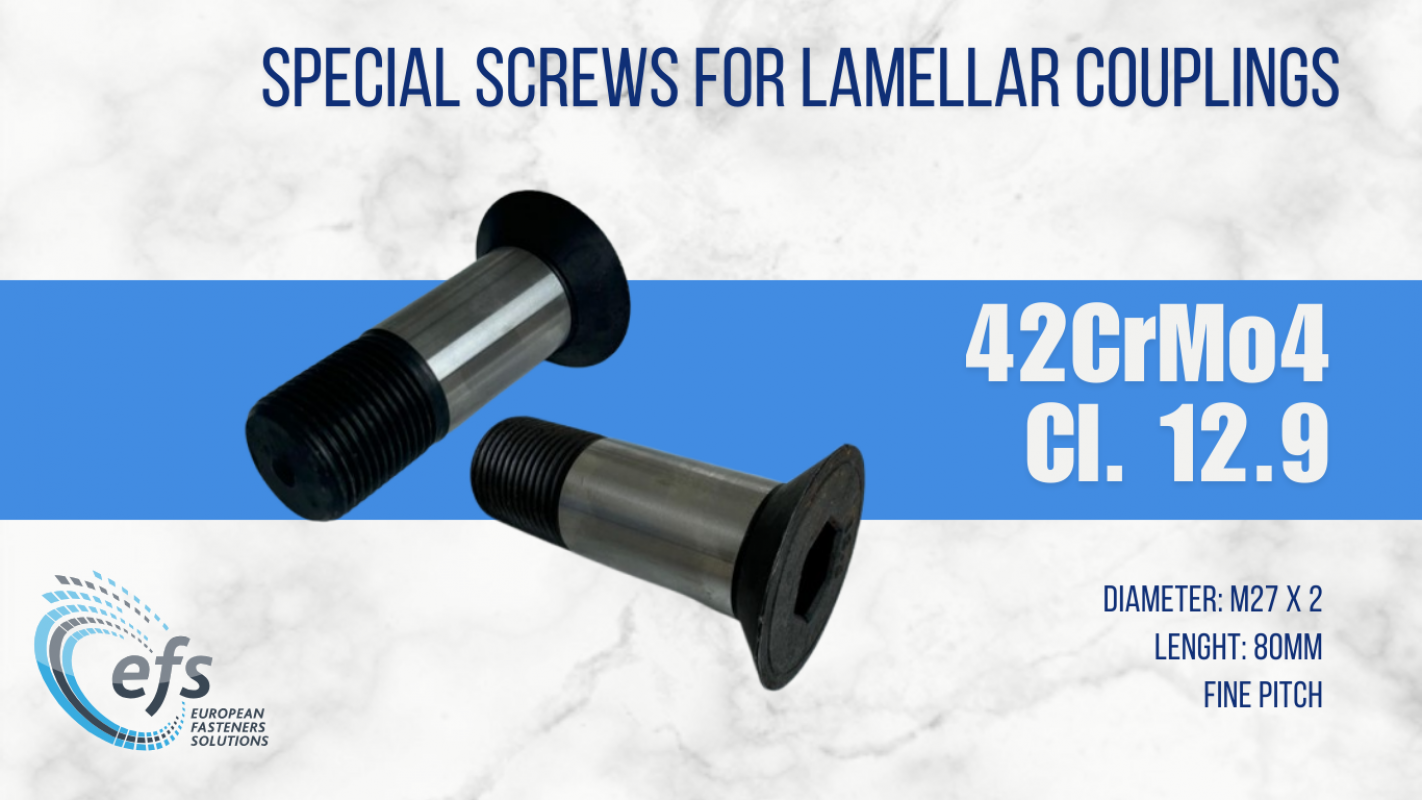
In addition to standard versions, the industrial market increasingly requires special made-to-drawing flanged screws with dedicated geometries, fine threads, specific surface treatments and integrated locking systems.
EFS supports standard and special supplies with certified European materials, controlled treatments and customized production for critical industrial applications.

Characteristics of Flanged Screws
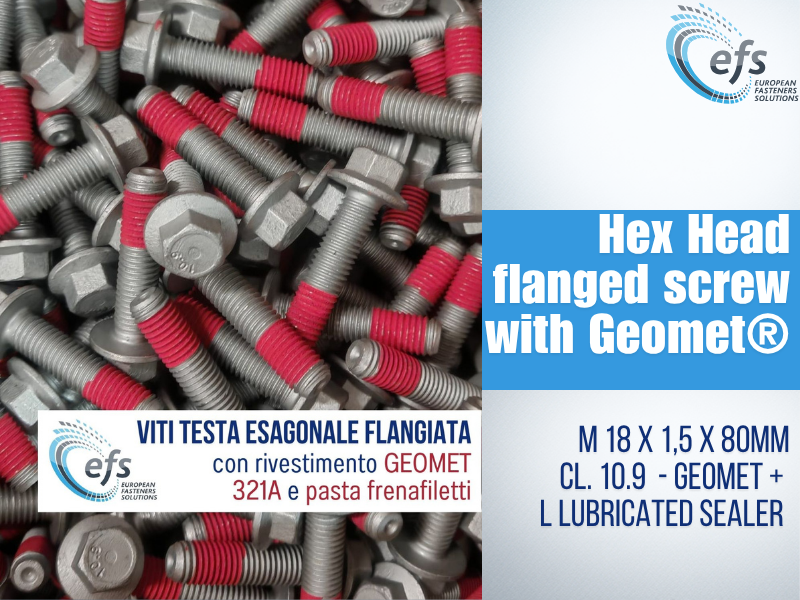
The main characteristic of flanged screws is the presence of an integrated flange under the head, which increases the bearing surface and improves preload distribution.
This configuration makes it possible to:
- reduce local pressure on the clamped component;
- improve load distribution;
- increase tightening stability;
- reduce the risk of loosening;
- eliminate or limit the use of additional washers.
In applications subject to continuous vibration, the flange also helps maintain a more stable connection over time.
Hexagon Flanged Screws
Hexagon flange head screws are the most widely used configuration in the industrial sector.
The hexagon head allows high torque values to be applied, while the integrated flange improves stress distribution on the assembled component.
These screws are used in structural frames, engine mounts, gearboxes, agricultural machinery, transmissions and mechanical systems subject to high loads.
Flanged Screws with Locking Serrations
Some configurations feature radial serrations under the flange, increasing friction with the bearing surface.
This solution, also known as a serrated flanged screw, is used when loosening caused by vibration or cyclic loads must be counteracted without using additional locking systems.
Serrated versions are particularly common in the automotive sector and in earthmoving machinery.
Fine-Thread Flanged Screws
Flanged screws with fine metric thread are used when more precise preload adjustment or greater resistance to loosening is required.
Fine thread increases the contact surface between the threads and helps improve tightening stability in applications subject to strong vibration.
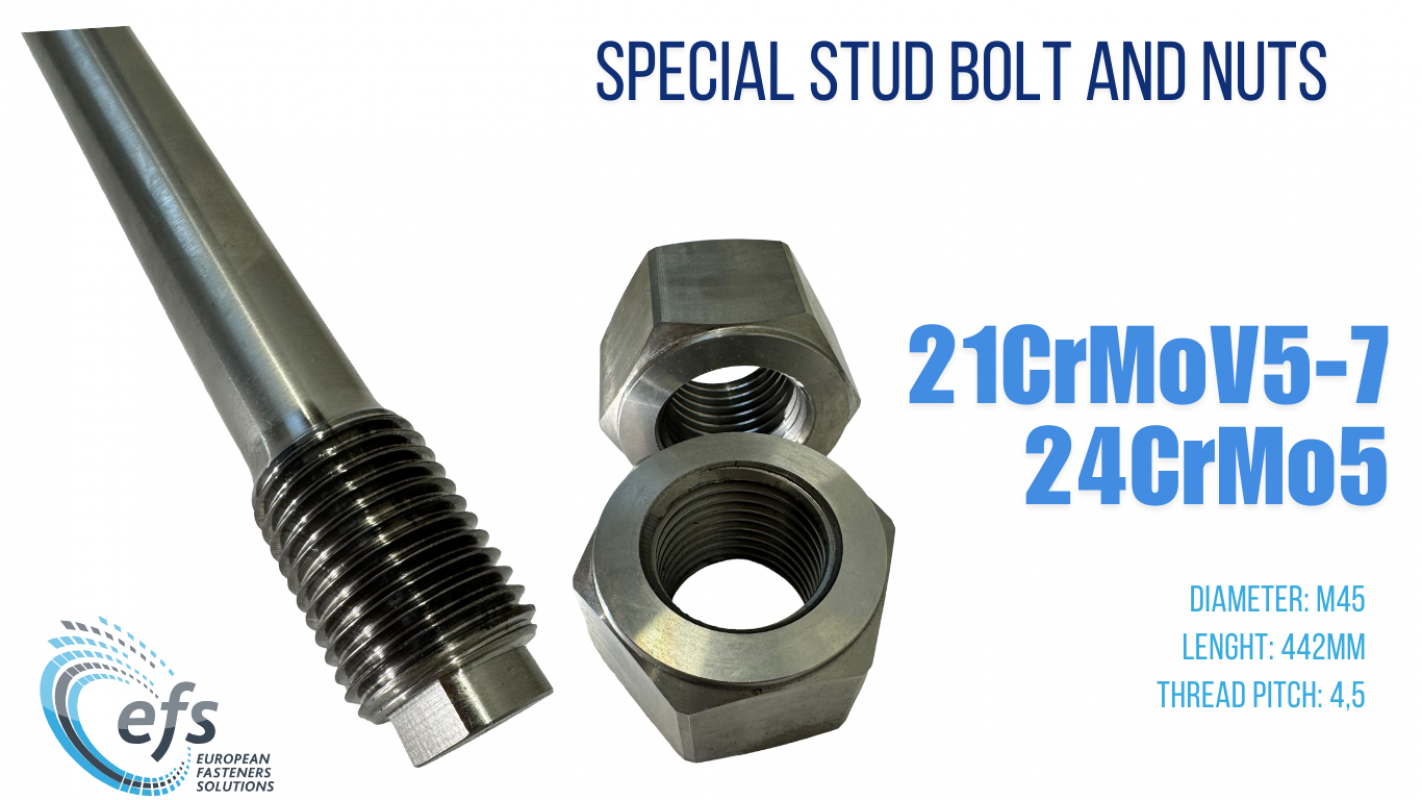
Special Made-to-Drawing Flanged Screws
Many industrial applications require configurations that fall outside the dimensions covered by standard regulations.
The most commonly requested customizations include:
- non-standard lengths;
- special diameters;
- fine threads;
- calibrated shanks;
- dedicated geometries;
- customized markings;
- pre-applied threadlocking compound;
- high-corrosion-resistance coatings.
Industrial Applications of Flanged Screws
Industrial flanged screws are used in many sectors characterized by high mechanical stress.
In the heavy-duty automotive sector, they are used in gearboxes, differentials, engine mounts, axles and transmission systems.
In agricultural and earthmoving machinery, they are used in frames, structural assemblies, transmission components and parts subject to continuous vibration.
In the machinery sector, they are used in gearboxes, mechanical assemblies, presses and automated lines.
Flanged screws are also used in industrial plant engineering, energy systems, material processing machines and equipment subject to frequent load cycles.
ISO, DIN and UNI Standards for Flanged Screws
The main reference standards for industrial flanged screws include:
- DIN 6921 – hexagon flange head screws
- ISO 4162 – hexagon flange screws with metric dimensional characteristics
- ISO 898-1 – mechanical properties of fasteners made of carbon steel and alloy steel
- ISO 965 – tolerances for metric threads
- EN 10204 – material certification and traceability
The choice of standard depends on the required geometry, property class and technical specifications of the application.
Main Types of Flanged Screws
The most common configurations include:
- DIN 6921 hexagon flanged screws;
- ISO 4162 flanged screws;
- serrated flanged screws;
- fine-thread flanged screws;
- flanged screws with pre-applied threadlocker;
- Torx flanged screws;
- special made-to-drawing flanged screws;
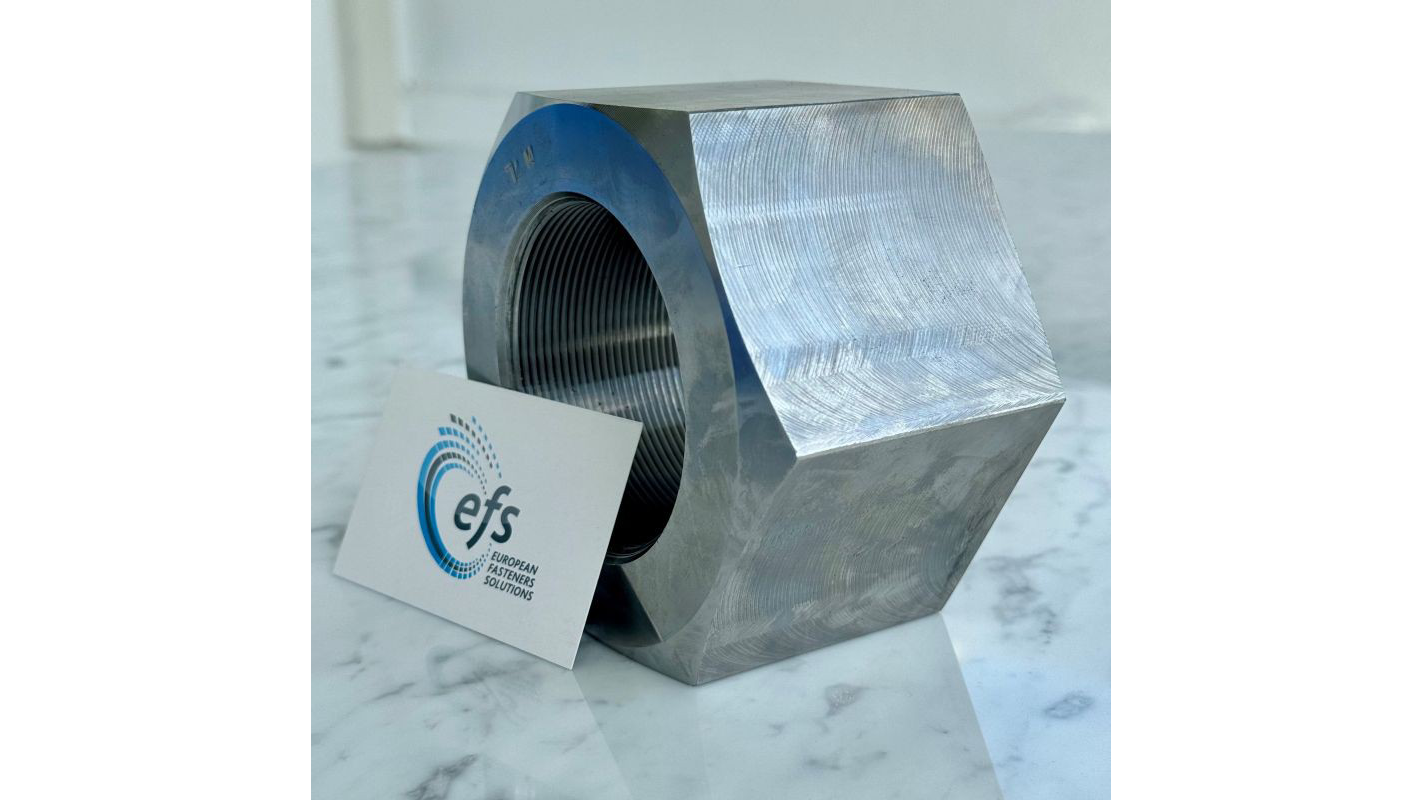
- oversized flanged screws.
Available Materials
Flanged screws can be manufactured in different materials depending on the operating conditions and project requirements.
The most commonly used materials include:
- carbon steels in property classes 8.8, 10.9 and 12.9;
- 42CrMo4;
- 39NiCrMo3;
- A2 and A4 stainless steels;
- Duplex;
- Super Duplex;
- ASTM A193 B7;
- ASTM A193 B16;
- Inconel 718;
- Hastelloy.
Material selection must take into account mechanical strength, operating temperature, corrosive environment and the required durability of the connection.
Surface Treatments
Surface treatments make it possible to increase corrosion resistance and improve fastening performance.
The main treatments available include:
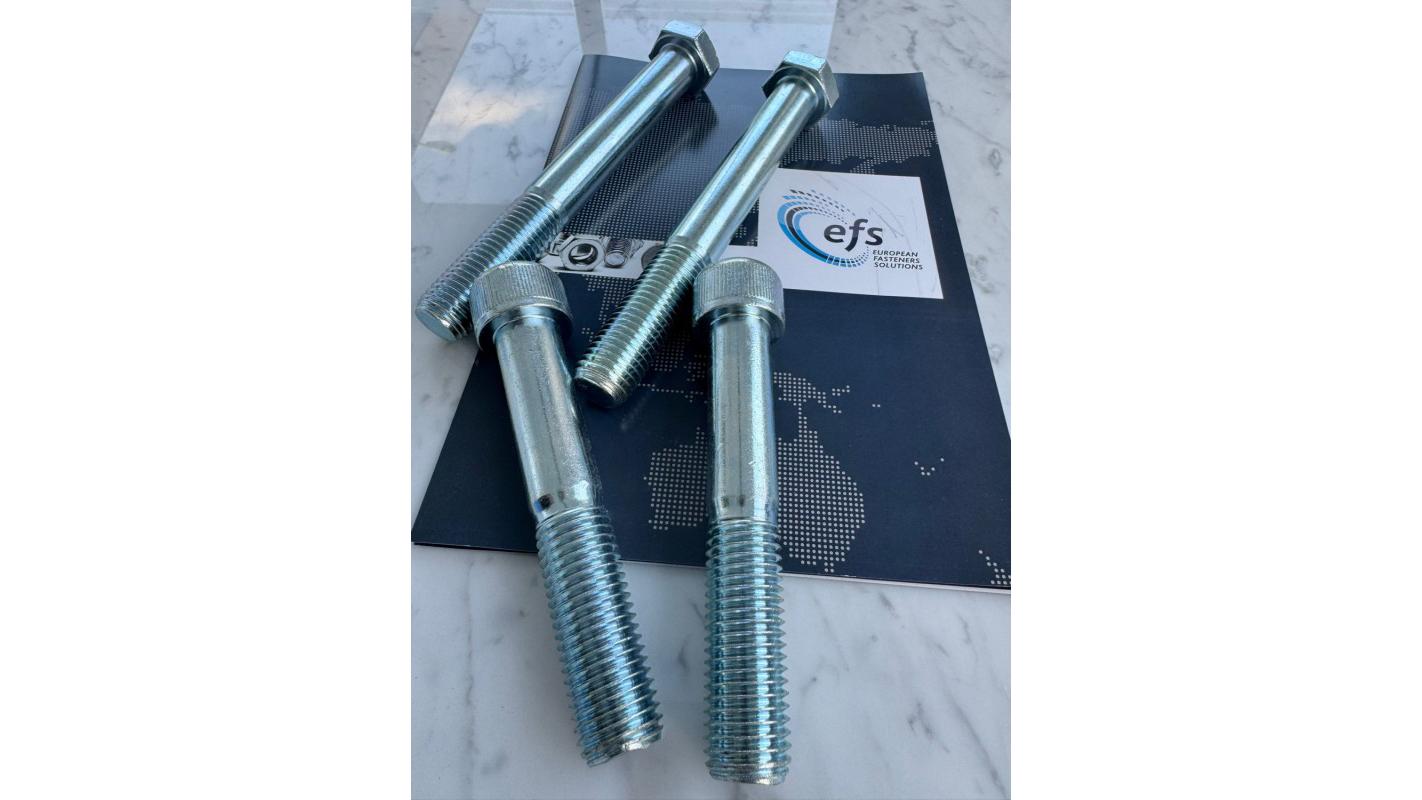
- electrolytic zinc plating;
- hot-dip galvanizing;
- Geomet®;
- zinc-nickel coating;
- phosphating;
- black oxide treatment;
- electroless nickel plating;
- Xylan®;
- pre-applied threadlocker;
- zinc-flake coatings.
For high-strength flanged screws, non-electrolytic coatings such as Geomet® are particularly suitable because they reduce the risk of hydrogen embrittlement.
EFS Capabilities
EFS manages standard and special supplies of flanged screws for industrial applications subject to high static and dynamic loads.
The main activities include:
- made-to-drawing production;
- non-standard diameters and lengths;
- fine threads and special threads;
- application of pre-applied threadlocker;
- marking and traceability;
- EN 10204 3.1 and 3.2 certificates;
- dimensional and metallurgical inspections;
- destructive and non-destructive testing;
- management of special surface treatments.
Thanks to a network of qualified European manufacturers, EFS supports supplies for the heavy-duty automotive, agricultural machinery, earthmoving, machinery, energy and industrial plant engineering sectors.
FAQ
What Is the Advantage of a Flanged Screw Compared to a Traditional Hex Head Screw?
The integrated flange increases the bearing surface and distributes the tightening load more effectively. In many applications, it also makes it possible to eliminate the washer and improve joint stability.
When Should a Serrated Flanged Screw Be Used?
Serrated versions are used when it is necessary to increase resistance to loosening caused by vibration and dynamic loads.
Which Property Classes Are Most Commonly Used for Flanged Screws?
The most common property classes are 8.8, 10.9 and 12.9 according to ISO 898-1. The choice depends on the applied loads and the characteristics of the assembly.
Is It Possible to Manufacture Made-to-Drawing Flanged Screws?
Yes. Flanged screws can be manufactured with custom geometries, fine threads, special diameters, dedicated treatments and integrated locking systems according to the project specifications.