

Industrial hex head screws are one of the most widely used fastening solutions in the machinery, heavy steel construction, Oil & Gas, energy, railway and metal infrastructure sectors. Thanks to their versatility and high mechanical performance, they are used in applications subject to static and dynamic loads, continuous vibration and severe operating environments.
Industrial hex head fasteners are used both in standardised assemblies and in special made-to-drawing production, where aspects such as traceability, surface treatments, dimensional inspections and material certifications become essential.
The main reference standards include ISO 4014, ISO 4017, DIN 931 and DIN 933, standards used to define the geometries, tolerances and dimensional characteristics of industrial hex head screws.
EFS supports both standard and special supplies with certified European production, traceable materials and treatments dedicated to the actual operating conditions.
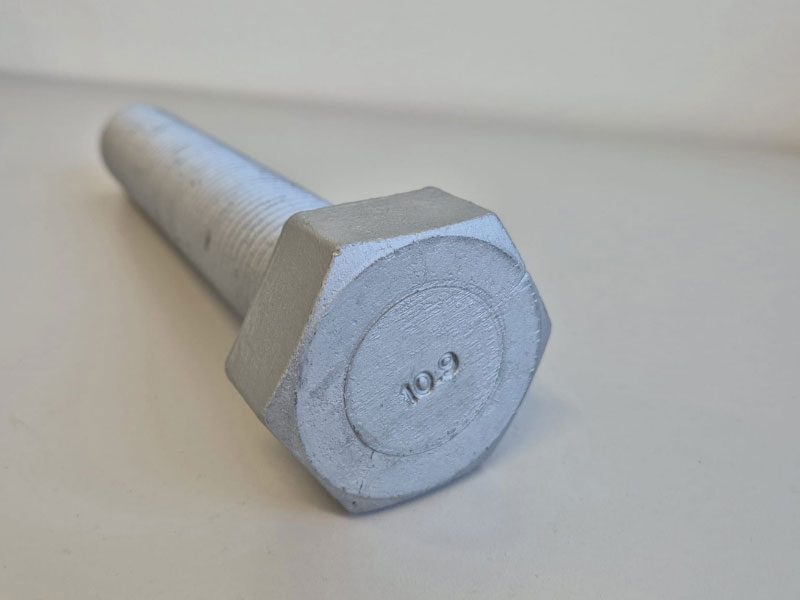
Characteristics of Industrial Hex Head Screws
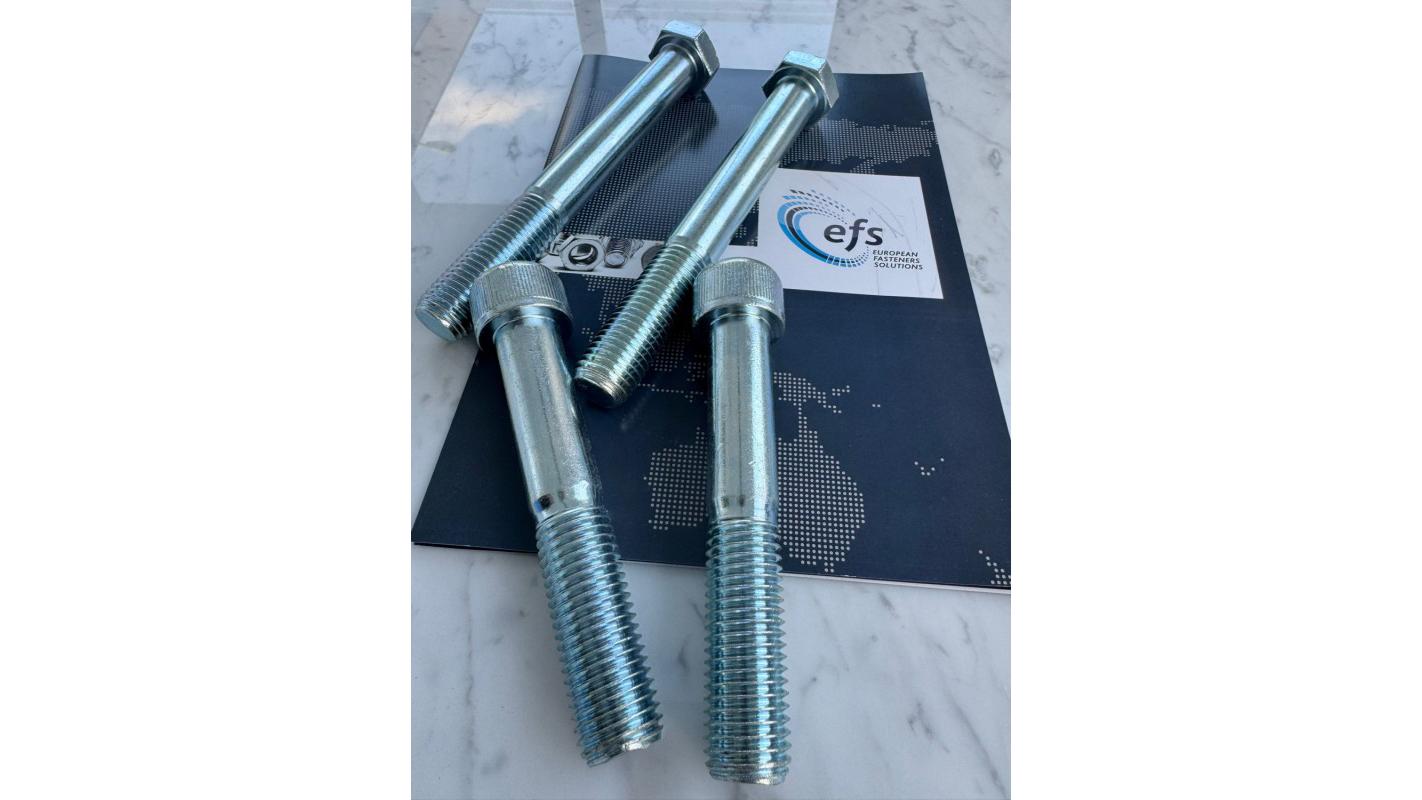
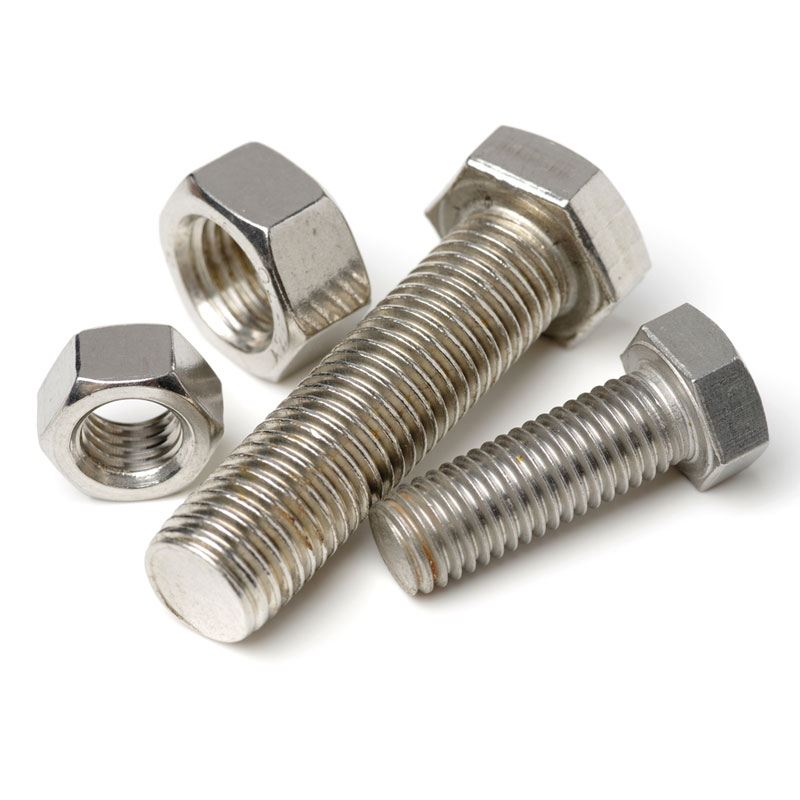
Industrial hex head screws are manufactured according to ISO, DIN and UNI standards, with partial-thread or full-thread configurations depending on the required mechanical and structural application.
The main reference standards are:
Partial-Thread Hex Head Screws
- ISO 4014
- DIN 931
- UNI 5737
These screws are frequently used in structural connections and fastenings subject to high loads, because the plain shank improves stress distribution in the most highly stressed areas.
Imperial equivalent:
- ASME B18.2.1 Hex Cap Screw
Full-Thread Hex Head Screws
- ISO 4017
- DIN 933
- UNI 5739
Full-thread versions are used when tightening must be developed along the entire useful length of the screw, or in applications involving reduced thicknesses.
Inch equivalent:
- ASME B18.2.1 Fully Threaded Hex Cap Screw
In the industrial sector, inch-size equivalents according to ASTM and ASME standards are also widely used, especially in Oil & Gas, energy plant engineering and offshore applications. In these contexts, UNC and UNF fasteners are used in materials such as ASTM A193 B7, B16, L7 and stainless steel B8/B8M.
The most commonly used property classes for industrial hex head fasteners are 8.8, 10.9 and 12.9 according to ISO 898-1. In the machinery, power transmission, heavy steel construction and heavy-duty automotive sectors, they are frequently combined with heat treatments, dimensional inspections and special machining operations.
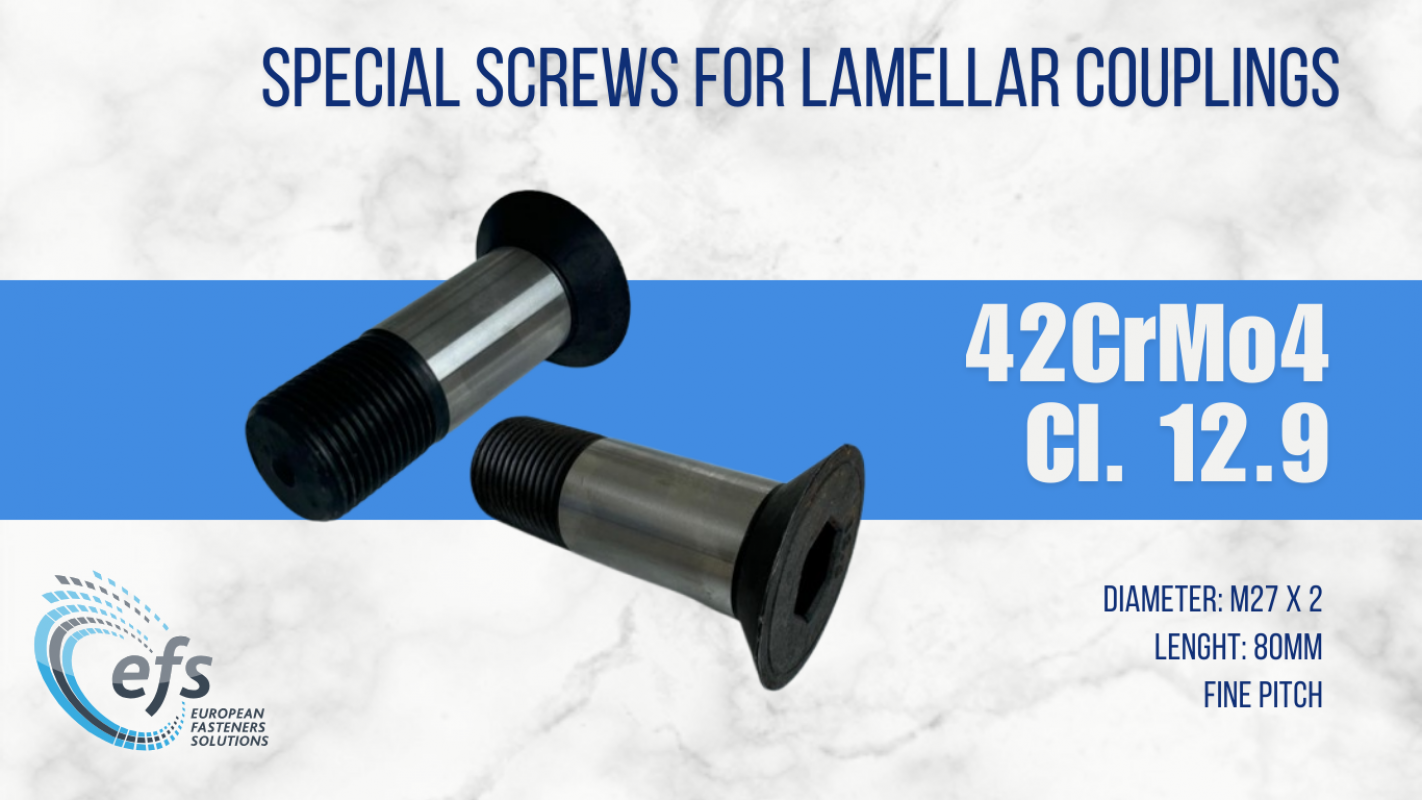
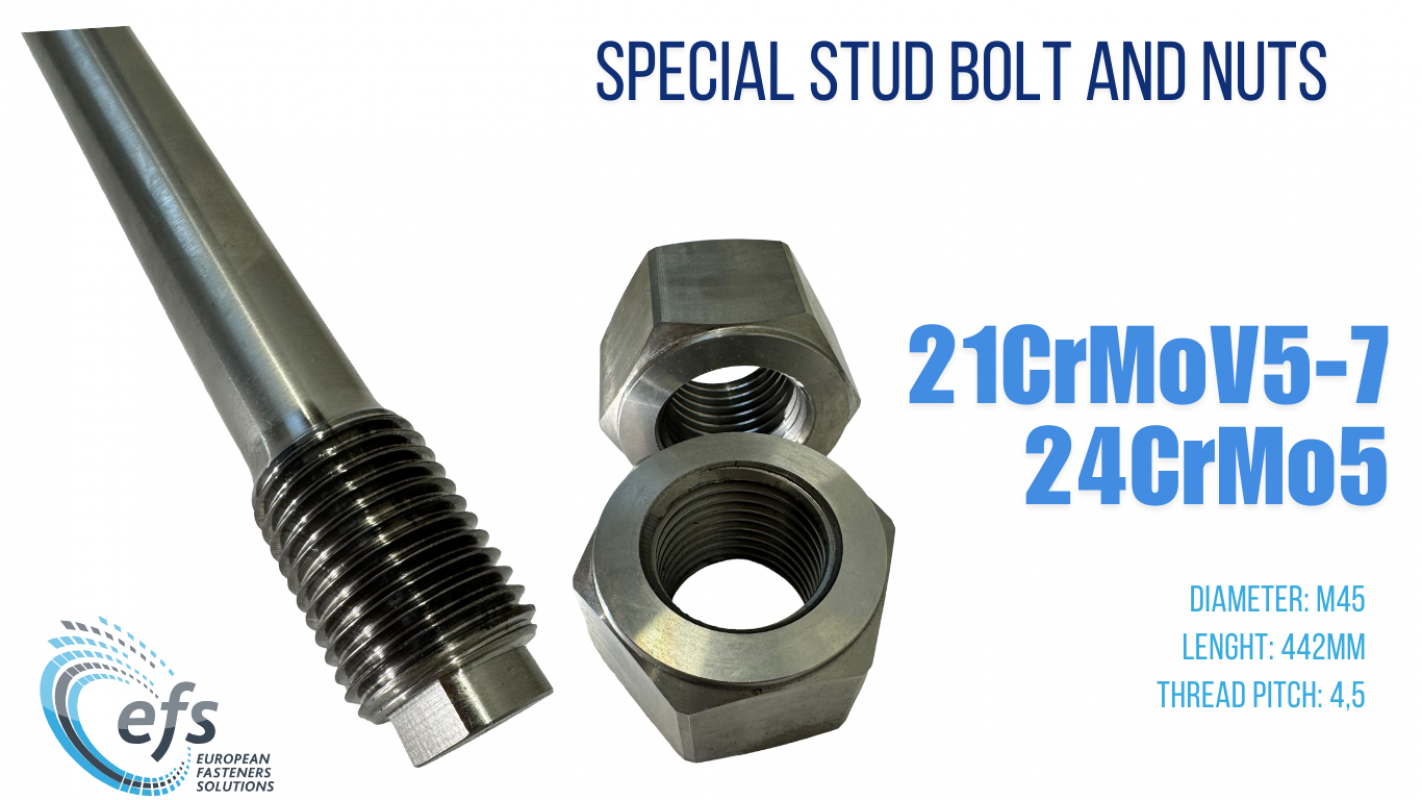
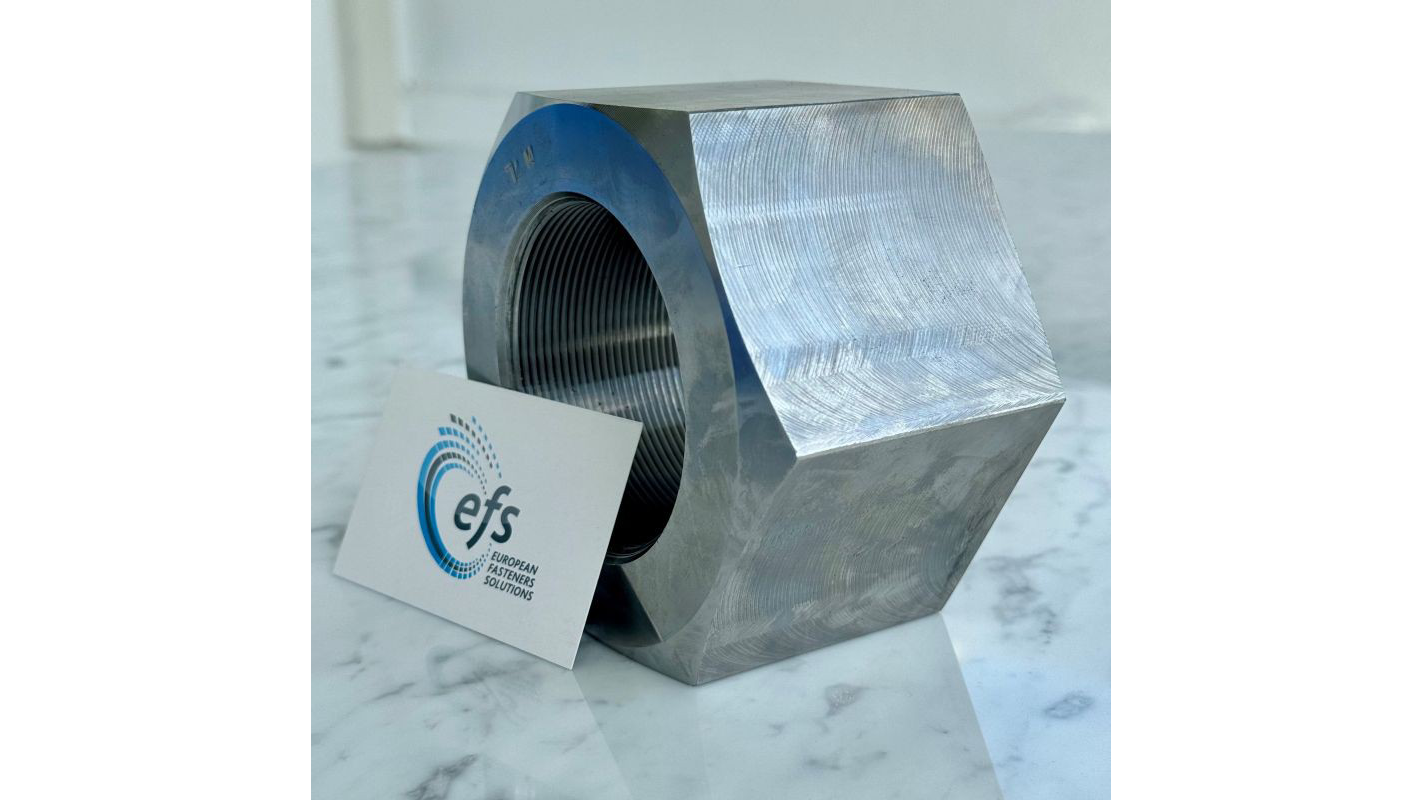
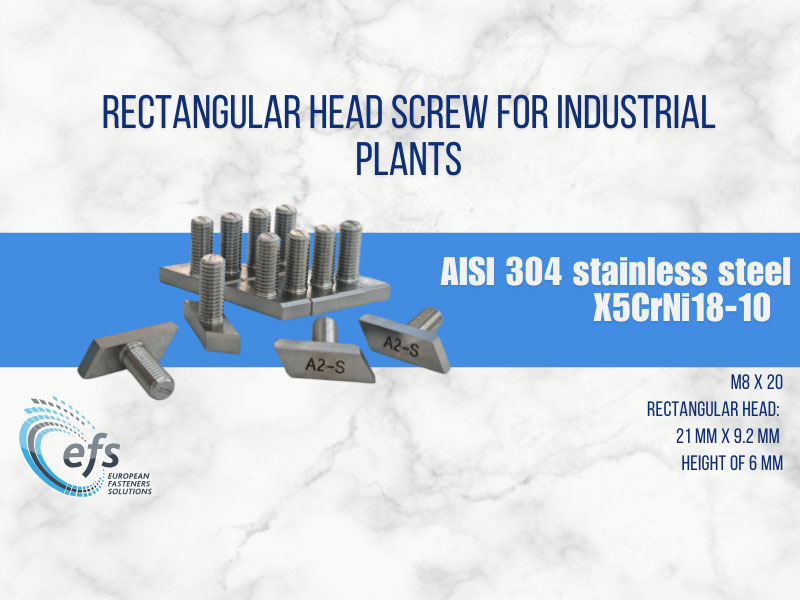
In addition to standard dimensions, EFS manages special made-to-drawing production with non-standard lengths, fine threads, oversized diameters, laser markings and dedicated machining for offshore applications, cement plants, energy plants and structures subject to strong vibration.
Industrial Applications of Hex Head Screws
Industrial hex head screws are used in many sectors characterized by high mechanical stress and severe operating environments.
In the Oil & Gas sector, they are used for high-pressure valves, flanges, heat exchangers and offshore structures, where materials such as ASTM B7, B16, Duplex, Super Duplex and Inconel are essential.
In machinery and machine tools, industrial hex head screws are used in gearboxes, presses, transmission assemblies and automated lines, applications where dimensional accuracy, tightening stability and fatigue resistance are essential requirements.
Railway infrastructure and steel construction frequently use hot-dip galvanized hex head screws for pylons, canopies, walkways and structures exposed to weathering. In these cases, anti-corrosion protection plays a decisive role in the durability of the connection.
Special made-to-drawing screws are also used in the crane, offshore and cement plant sectors, where they may undergo surface treatments, impact testing and specific dimensional inspections to ensure reliability under vibration, abrasion and continuous cyclic loads.
Available Materials
Hex head screws can be manufactured in carbon steels, alloy steels, stainless steels and special alloys, depending on the application.
The most commonly used materials and property classes include:
- property classes 8.8, 10.9 and 12.9, for mechanical and structural applications;
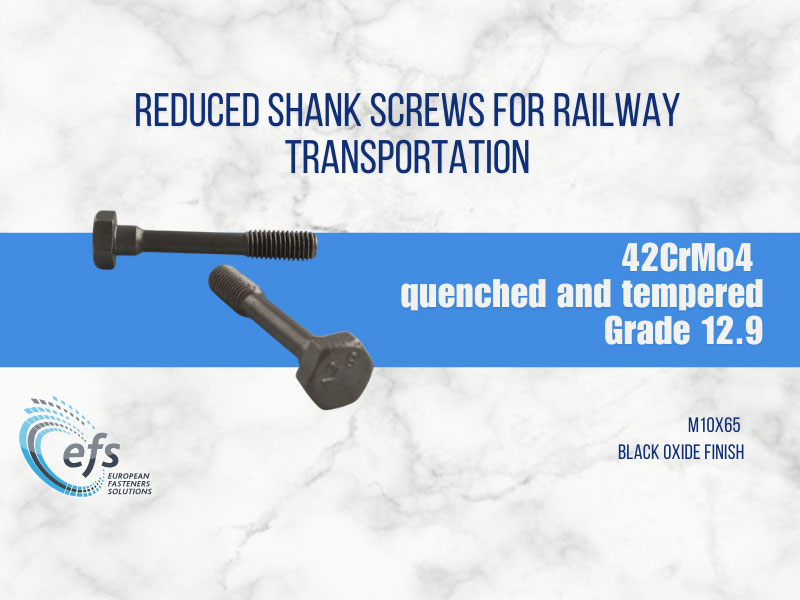
- 42CrMo4, 39NiCrMo3, 34CrNiMo6, 30CrNiMo8, for high-strength fasteners;
- A2, A4, AISI 304, 316, 316L, for moderately corrosive environments;
- Duplex and Super Duplex, for offshore, Oil & Gas, valves and chloride-rich environments;
- ASTM A193 B7, B7M, L7, B16, for energy plants, high-temperature and pressure applications;
- Inconel, Hastelloy, Monel, Incoloy, for extreme conditions, aggressive fluids or high temperatures.
EFS manages supplies in alloy steels, stainless steels, Duplex, Super Duplex, ASTM grades and nickel-based alloys such as Inconel, Hastelloy and Monel.
Possible Surface Treatments
The surface treatment is selected according to the operating environment, mechanical property class and assembly requirements. For hex head screws, the following options may be considered:
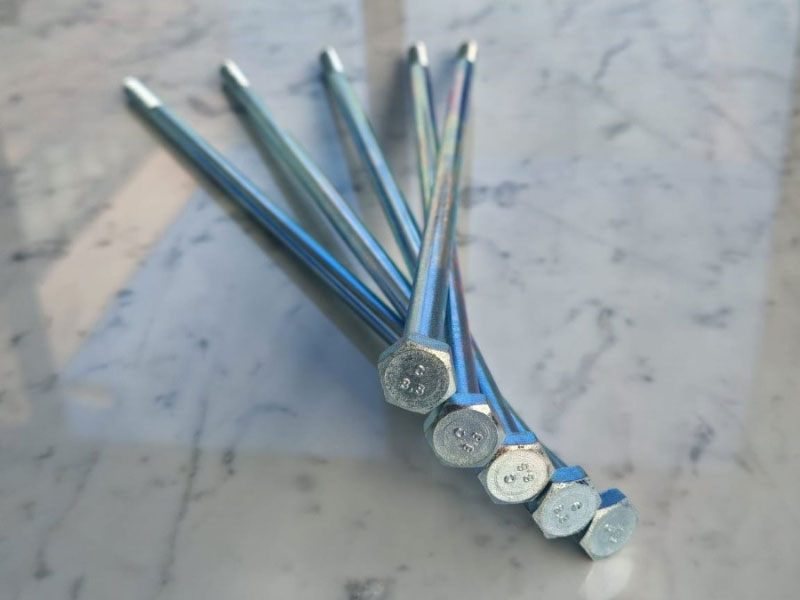
- electrolytic zinc plating, for corrosion protection in non-extreme industrial environments;
- hot-dip galvanizing, suitable for steel structures, infrastructure and outdoor applications;
- Geomet® / zinc-flake, particularly suitable for high-strength screws and severe environments;
- zinc-nickel coating, for applications requiring high corrosion resistance;
- black oxide treatment, for light protection and dimensional control;
- phosphating, useful in lubricated environments and mechanical applications;
- Xylan®, when protection, friction reduction or specific process requirements are needed;
- electroless nickel plating, for complex geometries and uniform coating thicknesses.
EFS manages treatments such as electrolytic zinc plating, hot-dip galvanizing, black oxide treatment, phosphating, Xylan®, Geomet®, electroless nickel plating and thread-locking inserts.
EFS Capabilities
EFS supports the supply of standard, special and made-to-drawing hex head screws, coordinating qualified Italian and European manufacturers, certified materials, surface treatments, machining operations and quality controls.
The company can manage components with non-standard diameters and lengths, special threads, dedicated markings, 3.1 or 3.2 certificates, dimensional inspections, mechanical testing and non-destructive testing. This approach makes it possible to supply not only the component itself, but a technical solution consistent with the final application.
FAQ
What Is the Difference Between DIN 931 and ISO 4014?
DIN 931 is the historical German standard for partial-thread hex head screws, while ISO 4014 represents the international evolution of the same type of fastener.
When Should a Partial-Thread Screw Be Used?
Partial-thread screws are used in structural connections where it is necessary to keep the plain shank in the shear zone or in the area subject to the highest stress.
Which Materials Should Be Selected for Corrosive Environments?
In marine or chemically aggressive environments, AISI 316 stainless steel, Duplex, Super Duplex and special alloys such as Inconel or Hastelloy are frequently used. However, fastener protection also depends on the surface treatment: hot-dip galvanizing, HDG, Geomet®, Xylan® and zinc-nickel coating are selected according to the level of corrosion, the required tolerances and the operating conditions of the plant.