


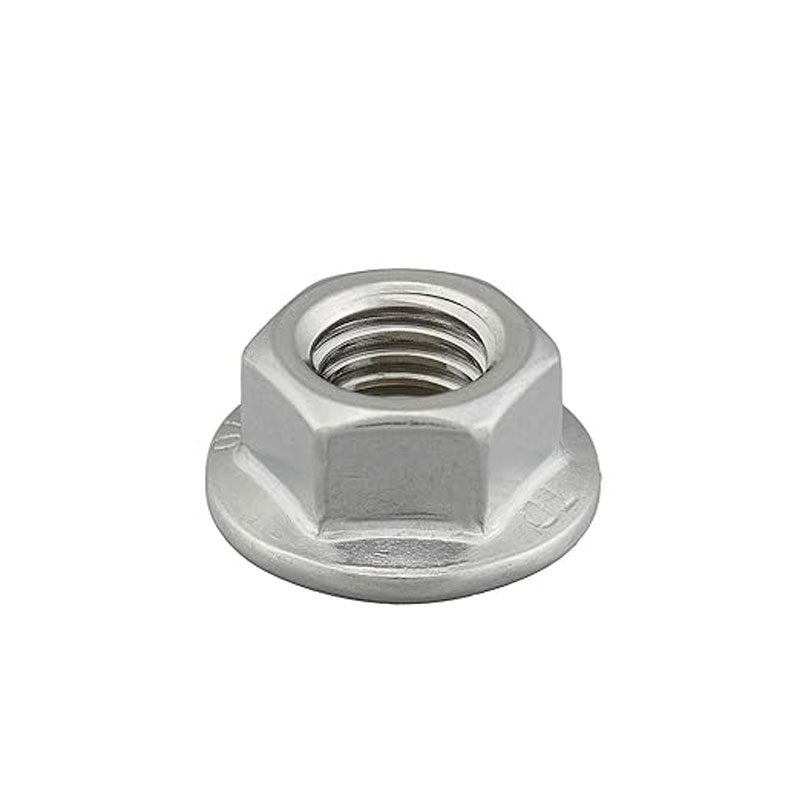
Industrial flanged nuts are fastening components designed to distribute the tightening load over a larger surface area than traditional hex nuts. The integrated flange performs a function similar to that of a built-in washer, helping to reduce localized pressure on the clamped component and improving joint stability.
This characteristic makes them particularly suitable for applications subject to vibration, dynamic loads or frequent assembly and disassembly operations. For this reason, they are used in many industrial sectors, including machinery, heavy-duty automotive, agricultural machinery, earthmoving, energy and metal construction.
Characteristics of Flanged Nuts
The main distinctive feature of flanged nuts is the presence of an enlarged base that increases the bearing surface and allows more uniform distribution of tightening forces.
Depending on the application, they can be supplied in different configurations:
- smooth flanged nuts for general mechanical applications;
- serrated flanged nuts, designed to increase resistance to loosening;
- special made-to-drawing flanged nuts for specific dimensional or functional requirements.
Compared to the combined use of a separate nut and washer, the flanged nut makes it possible to simplify assembly and reduce the number of components in the fastening system.
Industrial Applications of Flanged Nuts
Flanged nuts are used in all applications where load distribution must be improved and mating surfaces must be protected.
In the machinery sector, they are used on transmission assemblies, gearboxes, load-bearing structures and machine tools. In heavy-duty automotive and earthmoving machinery, they are frequently used on frames, suspensions and structural components subject to vibration and high loads.
In the agricultural sector and in lifting equipment, the integrated flange also helps improve tightening stability and limit local deformation of the assembled components.
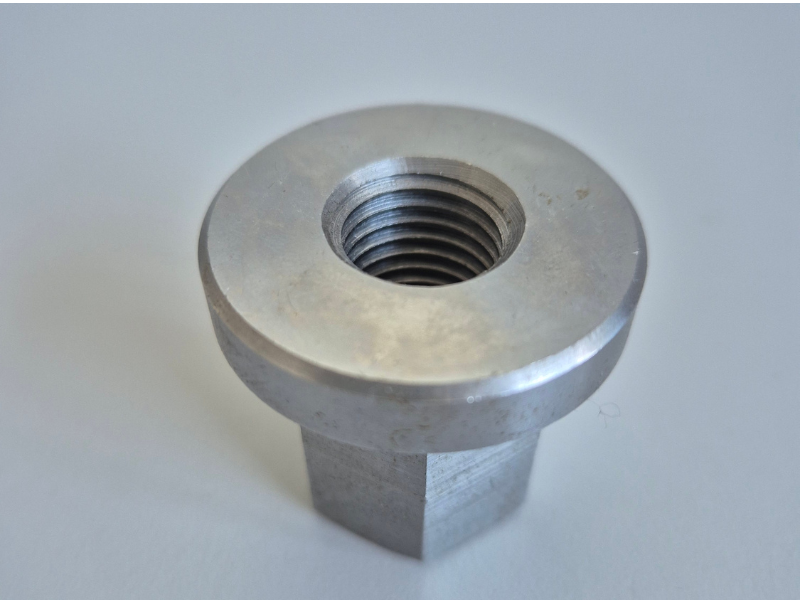
When designed to drawing, flanged nuts can also be used in special applications characterized by high static and dynamic loads or specific dimensional constraints. A typical example is represented by flanged coupling nuts manufactured for the machinery sector, where the flange helps distribute the load and improve the durability of the connection.
ISO, DIN and UNI Standards
Flanged nuts are generally manufactured according to international standards that define their geometry, dimensions and tolerances.
The most widely used standards include:
- DIN 6923 for hexagon flanged nuts;
- ISO 4161, the international equivalent of DIN 6923;
- DIN 6331 for specific flanged coupling nuts used in mechanical applications.
The choice of standard depends on the configuration of the connection, the dimensional requirements of the project and the specifications required by the plant or machinery manufacturer.
Main Types of Flanged Nuts
The flanged nut family includes both standardized components and special solutions developed for specific industrial applications.
The most common configurations include hexagon flanged nuts, self-locking flanged nuts, flanged coupling nuts and made-to-drawing flanged nuts with customized heights, diameters or threads.
In the most complex industrial applications, the nut is often designed as an integral part of the entire fastening system, according to the loads, required tolerances and expected operating conditions.
Available Materials
EFS supports supplies of flanged nuts in carbon steels, high-strength alloy steels, A2 and A4 stainless steels, ASTM materials for Oil & Gas applications, Duplex, Super Duplex and special alloys such as Inconel and Hastelloy. Material selection is based on mechanical loads, operating environment, the presence of corrosive agents and the durability requirements of the application.
Surface Treatments
Flanged nuts can be supplied with different surface treatments depending on the operating conditions and corrosion protection requirements.
The most commonly used treatments include electrolytic zinc plating, hot-dip galvanizing, Geomet®, zinc-nickel coating, phosphating, black oxide treatment and electroless nickel plating. The correct choice of treatment makes it possible to improve the durability of the connection and maintain consistent fastening system performance over time.
EFS Capabilities
EFS manages supplies of standard and special flanged nuts through a network of qualified Italian and European manufacturers. In addition to standard components, made-to-drawing nuts can be produced with non-standard dimensions, special materials, dedicated machining operations and specific surface treatments.
Supplies can be accompanied by EN 10204 3.1 or 3.2 certificates, dimensional inspections, mechanical testing and full raw material traceability, supporting the most critical industrial applications.
FAQ
When Is It Advisable to Use a Flanged Nut?
A flanged nut is particularly suitable when the tightening load needs to be distributed over a larger surface area or when the number of components must be reduced by eliminating the separate washer.
What Is the Difference Between a Flanged Nut and a Standard Hex Nut?
The presence of the integrated flange increases the bearing surface and helps reduce localized pressure on the clamped component.
Is It Possible to Manufacture Made-to-Drawing Flanged Nuts?
Yes. For specific industrial applications, flanged nuts can be manufactured with customized geometries, special materials, dedicated threads and documentation requirements defined by the customer.